A potential customer brimming with excitement discovers your business online with your SEO strategy. But without it, they're met with a wall – content that doesn't resonate, imagery that feels exclusionary, or a clunky design on their mobile device.
Familiar with this? That's the scenario your business can run into if you don't use inclusive SEO in your strategy. But what is it? And how can it help your business and your clients?
SEO should not only be effective, but inclusive. Now, are you ready to unlock the full potential of your online presence and reach a wider audience? Discover how crafting an inclusive SEO can transform your business!
What’s Inside?
- What is An Inclusive SEO Strategy?
- What is DEI in Inclusive SEO Strategy?
- How To Make an Inclusive SEO Strategy
- Plan Your SEO Strategy With Us!
What is An Inclusive SEO Strategy?
An inclusive SEO strategy ensures you optimise your website and content to be discoverable and usable for a diverse range of users. It goes beyond traditional SEO strategy by considering the needs of people from various backgrounds and abilities.
We've known that regular SEO focuses on ranking high in search results. But when you make it inclusive, you create content that resonates with a broad audience and reaches a wider range of potential customers.
Why Is SEO Strategy Important?
A comprehensive SEO plan does so much for your business, but what are those? We listed down the benefits of making your SEO strategy inclusive for everyone.
Reaches a Wider Audience
By using inclusive language and catering to diverse needs in your SEO plan, you open your website up to a much larger pool of potential customers who might have otherwise been excluded.
Improves Brand Reputation
Demonstrating a commitment to inclusion through your SEO strategy portrays your brand positively. It shows that you value diversity and welcome everyone.
Boosts User Engagement
Content written with inclusivity in mind is more likely to resonate with a wider audience. People are more likely to stay engaged and explore your website if they feel seen and acknowledged.
Enhances Accessibility
SEO and accessibility go hand-in-hand. Many SEO best practices, like clear website structure and proper coding, also improve accessibility for users with disabilities. This ensures everyone can access your information.
Potential for Higher Rankings
While not a direct ranking factor, some believe that websites that prioritise user experience, which includes accessibility, may be looked upon more favorably by search engines.
Avoids Unintentional Bias
Inclusive SEO encourages you to critically examine your target audience and any wrong assumptions you might have made. This can help you avoid alienating potential customers.
In conclusion, inclusive SEO strategy isn't just about being politically correct, it's about smart business strategy. By creating a welcoming and accessible online space, you can reach a wider audience, improve brand perception, and ultimately achieve greater success.
What is DEI in Inclusive SEO Strategy?
Whenever we discuss inclusive SEO, the concept of DEI appears. But what is it? And how important is this in making our inclusive SEO strategy successful?
DEI stands for diversity, equity, and inclusion. In the context of inclusive SEO, it refers to creating a search engine optimisation strategy considerate to the needs of a diverse audience. Here's how each aspect of DEI applies to SEO.
Diversity
A diverse SEO strategy recognises your target audience's various identities and experiences. This includes race, ethnicity, gender identity, sexual orientation, ability, religion, age, and more.
Equity
You're building an equitable business when you provide everyone with an equal opportunity to find your website through search engines. This involves removing any barriers preventing certain groups from accessing your content.
Inclusion
Inclusivity in SEO involves crafting content and designing your website that makes everyone feel welcomed and accepted. This includes using inclusive language, accessible design elements, and imagery that reflects the diversity of your audience.
By applying these DEI principles to your SEO strategy, you can ensure that your website is discoverable by a wider range of potential customers, regardless of their background. This can lead to increased brand awareness, better brand reputation, and ultimately, a more successful online presence.
How To Make an Inclusive SEO Strategy?
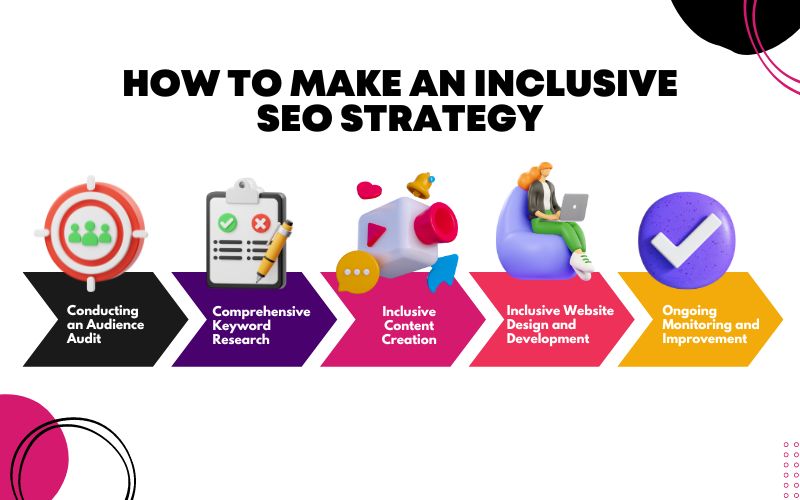
Inclusive SEO is easier to achieve than you've thought. Just follow these steps and your business is on its way to becoming an inclusive one.
Conducting an Audience Audit
Conducting an audience audit is often the first step in making an inclusive SEO strategy. But let's change it up for a bit.
A better approach to doing an audience audit for inclusive SEO is to go beyond website analytics. While website analytics provide valuable data on current visitors, these numbers might not reveal the entire audience picture.
Look at surveys, social media engagement, and market research to understand the diversity within your target audience. It allows you to see some unique audience behaviour and features, and take note of them as you strategise your SEO.
Comprehensive Keyword Research
An integral part of any SEO strategy is keyword research. This time, you must look for long-tail variations of your usual keywords.
Expand your keyword research beyond primary keywords. Include low-competition keywords with long-tail variations that reflect how people from diverse backgrounds might search for your product or service. Tools like Google Keyword Planner can help with this.
Consider cultural nuances too when doing keyword research. Certain keywords might have unintended connotations in specific cultures. Research cultural variations in search terms to ensure your keywords are reaching the intended audience. It also makes you a responsible business.
Inclusive Content Creation
As you proceed to content creation, an inclusive strategy for SEO should remain the top priority.
First, aim to write for readability. Use clear, concise language and avoid overly technical jargon. Aim for a Flesch-Kincaid reading ease score above 70 to ensure easy comprehension for a wider audience. There are free online tools to check this score.
Incorporate multimedia as well when creating website content. Break up chunks of text with relevant videos, infographics, and audio recordings. This caters to different learning styles and can improve accessibility for users with visual impairments.
And as always, prioritise mobile-friendliness. A significant portion of web searches happen on mobile devices. Ensure your website has a responsive web design that functions well on all screen sizes. It also improves your business searchability online.
Inclusive Website Design and Development
Website design and development should also conform with your inclusive SEO plan to ensure unified results.
For web development, a valid and clean code is essential for search engines to properly crawl and index your website. This also improves accessibility for screen readers and assistive technologies.
Next, optimise alt texts for your website images. Include descriptive alt text for all images on your website. This helps visually impaired users understand the content of the image and is also considered by search engines.
Lastly, a clear keyboard navigation is essential. Make sure your website can be fully navigated using just a keyboard. This is crucial for users who rely on assistive technologies or have difficulty using a mouse.
Ongoing Monitoring and Improvement
But it doesn't end there as soon as you do them all. An SEO strategy, like other marketing strategies, is also an ongoing process you should check from time to time.
Use website analytics tools to track user engagement metrics across different demographics. This can help identify areas where your website might be less inclusive for certain audience segments.
Accessibility testing tools can also help. There are online tools and browser extensions that can help you identify and fix accessibility issues on your website.
Plan Your SEO Strategy With Us!
In today's digital landscape, exclusion is simply bad for business. An Inclusive SEO makes a big difference for your business, as you welcome all sorts of people into your gates, making them feel welcomed and accepted.
Remember, everyone deserves to be seen, heard, and understood online. Let's work together to craft an SEO strategy that celebrates diversity and propels your business forward. Contact our team of SEO experts today for a free consultation and see how we can strategise your SEO!
A potential customer brimming with excitement discovers your business online with your SEO strategy. But without it, they're met with a wall – content that doesn't resonate, imagery that feels exclusionary, or a clunky design on their mobile device.
Familiar with this? That's the scenario your business can run into if you don't use inclusive SEO in your strategy. But what is it? And how can it help your business and your clients?
SEO should not only be effective, but inclusive. Now, are you ready to unlock the full potential of your online presence and reach a wider audience? Discover how crafting an inclusive SEO can transform your business!
What’s Inside?
- What is An Inclusive SEO Strategy?
- What is DEI in Inclusive SEO Strategy?
- How To Make an Inclusive SEO Strategy
- Plan Your SEO Strategy With Us!
What is An Inclusive SEO Strategy?
An inclusive SEO strategy ensures you optimise your website and content to be discoverable and usable for a diverse range of users. It goes beyond traditional SEO strategy by considering the needs of people from various backgrounds and abilities.
We've known that regular SEO focuses on ranking high in search results. But when you make it inclusive, you create content that resonates with a broad audience and reaches a wider range of potential customers.
Why Is SEO Strategy Important?
A comprehensive SEO plan does so much for your business, but what are those? We listed down the benefits of making your SEO strategy inclusive for everyone.
Reaches a Wider Audience
By using inclusive language and catering to diverse needs in your SEO plan, you open your website up to a much larger pool of potential customers who might have otherwise been excluded.
Improves Brand Reputation
Demonstrating a commitment to inclusion through your SEO strategy portrays your brand positively. It shows that you value diversity and welcome everyone.
Boosts User Engagement
Content written with inclusivity in mind is more likely to resonate with a wider audience. People are more likely to stay engaged and explore your website if they feel seen and acknowledged.
Enhances Accessibility
SEO and accessibility go hand-in-hand. Many SEO best practices, like clear website structure and proper coding, also improve accessibility for users with disabilities. This ensures everyone can access your information.
Potential for Higher Rankings
While not a direct ranking factor, some believe that websites that prioritise user experience, which includes accessibility, may be looked upon more favorably by search engines.
Avoids Unintentional Bias
Inclusive SEO encourages you to critically examine your target audience and any wrong assumptions you might have made. This can help you avoid alienating potential customers.
In conclusion, inclusive SEO strategy isn't just about being politically correct, it's about smart business strategy. By creating a welcoming and accessible online space, you can reach a wider audience, improve brand perception, and ultimately achieve greater success.
What is DEI in Inclusive SEO Strategy?
Whenever we discuss inclusive SEO, the concept of DEI appears. But what is it? And how important is this in making our inclusive SEO strategy successful?
DEI stands for diversity, equity, and inclusion. In the context of inclusive SEO, it refers to creating a search engine optimisation strategy considerate to the needs of a diverse audience. Here's how each aspect of DEI applies to SEO.
Diversity
A diverse SEO strategy recognises your target audience's various identities and experiences. This includes race, ethnicity, gender identity, sexual orientation, ability, religion, age, and more.
Equity
You're building an equitable business when you provide everyone with an equal opportunity to find your website through search engines. This involves removing any barriers preventing certain groups from accessing your content.
Inclusion
Inclusivity in SEO involves crafting content and designing your website that makes everyone feel welcomed and accepted. This includes using inclusive language, accessible design elements, and imagery that reflects the diversity of your audience.
By applying these DEI principles to your SEO strategy, you can ensure that your website is discoverable by a wider range of potential customers, regardless of their background. This can lead to increased brand awareness, better brand reputation, and ultimately, a more successful online presence.
How To Make an Inclusive SEO Strategy?
Inclusive SEO is easier to achieve than you've thought. Just follow these steps and your business is on its way to becoming an inclusive one.
Conducting an Audience Audit
Conducting an audience audit is often the first step in making an inclusive SEO strategy. But let's change it up for a bit.
A better approach to doing an audience audit for inclusive SEO is to go beyond website analytics. While website analytics provide valuable data on current visitors, these numbers might not reveal the entire audience picture.
Look at surveys, social media engagement, and market research to understand the diversity within your target audience. It allows you to see some unique audience behaviour and features, and take note of them as you strategise your SEO.
Comprehensive Keyword Research
An integral part of any SEO strategy is keyword research. This time, you must look for long-tail variations of your usual keywords.
Expand your keyword research beyond primary keywords. Include low-competition keywords with long-tail variations that reflect how people from diverse backgrounds might search for your product or service. Tools like Google Keyword Planner can help with this.
Consider cultural nuances too when doing keyword research. Certain keywords might have unintended connotations in specific cultures. Research cultural variations in search terms to ensure your keywords are reaching the intended audience. It also makes you a responsible business.
Inclusive Content Creation
As you proceed to content creation, an inclusive strategy for SEO should remain the top priority.
First, aim to write for readability. Use clear, concise language and avoid overly technical jargon. Aim for a Flesch-Kincaid reading ease score above 70 to ensure easy comprehension for a wider audience. There are free online tools to check this score.
Incorporate multimedia as well when creating website content. Break up chunks of text with relevant videos, infographics, and audio recordings. This caters to different learning styles and can improve accessibility for users with visual impairments.
And as always, prioritise mobile-friendliness. A significant portion of web searches happen on mobile devices. Ensure your website has a responsive web design that functions well on all screen sizes. It also improves your business searchability online.
Inclusive Website Design and Development
Website design and development should also conform with your inclusive SEO plan to ensure unified results.
For web development, a valid and clean code is essential for search engines to properly crawl and index your website. This also improves accessibility for screen readers and assistive technologies.
Next, optimise alt texts for your website images. Include descriptive alt text for all images on your website. This helps visually impaired users understand the content of the image and is also considered by search engines.
Lastly, a clear keyboard navigation is essential. Make sure your website can be fully navigated using just a keyboard. This is crucial for users who rely on assistive technologies or have difficulty using a mouse.
Ongoing Monitoring and Improvement
But it doesn't end there as soon as you do them all. An SEO strategy, like other marketing strategies, is also an ongoing process you should check from time to time.
Use website analytics tools to track user engagement metrics across different demographics. This can help identify areas where your website might be less inclusive for certain audience segments.
Accessibility testing tools can also help. There are online tools and browser extensions that can help you identify and fix accessibility issues on your website.
Plan Your SEO Strategy With Us!
In today's digital landscape, exclusion is simply bad for business. An Inclusive SEO makes a big difference for your business, as you welcome all sorts of people into your gates, making them feel welcomed and accepted.
Remember, everyone deserves to be seen, heard, and understood online. Let's work together to craft an SEO strategy that celebrates diversity and propels your business forward. Contact our team of SEO experts today for a free consultation and see how we can strategise your SEO!
A potential customer brimming with excitement discovers your business online with your SEO strategy. But without it, they're met with a wall – content that doesn't resonate, imagery that feels exclusionary, or a clunky design on their mobile device.
Familiar with this? That's the scenario your business can run into if you don't use inclusive SEO in your strategy. But what is it? And how can it help your business and your clients?
SEO should not only be effective, but inclusive. Now, are you ready to unlock the full potential of your online presence and reach a wider audience? Discover how crafting an inclusive SEO can transform your business!
What’s Inside?
- What is An Inclusive SEO Strategy?
- What is DEI in Inclusive SEO Strategy?
- How To Make an Inclusive SEO Strategy
- Plan Your SEO Strategy With Us!
What is An Inclusive SEO Strategy?
An inclusive SEO strategy ensures you optimise your website and content to be discoverable and usable for a diverse range of users. It goes beyond traditional SEO strategy by considering the needs of people from various backgrounds and abilities.
We've known that regular SEO focuses on ranking high in search results. But when you make it inclusive, you create content that resonates with a broad audience and reaches a wider range of potential customers.
Why Is SEO Strategy Important?
A comprehensive SEO plan does so much for your business, but what are those? We listed down the benefits of making your SEO strategy inclusive for everyone.
Reaches a Wider Audience
By using inclusive language and catering to diverse needs in your SEO plan, you open your website up to a much larger pool of potential customers who might have otherwise been excluded.
Improves Brand Reputation
Demonstrating a commitment to inclusion through your SEO strategy portrays your brand positively. It shows that you value diversity and welcome everyone.
Boosts User Engagement
Content written with inclusivity in mind is more likely to resonate with a wider audience. People are more likely to stay engaged and explore your website if they feel seen and acknowledged.
Enhances Accessibility
SEO and accessibility go hand-in-hand. Many SEO best practices, like clear website structure and proper coding, also improve accessibility for users with disabilities. This ensures everyone can access your information.
Potential for Higher Rankings
While not a direct ranking factor, some believe that websites that prioritise user experience, which includes accessibility, may be looked upon more favorably by search engines.
Avoids Unintentional Bias
Inclusive SEO encourages you to critically examine your target audience and any wrong assumptions you might have made. This can help you avoid alienating potential customers.
In conclusion, inclusive SEO strategy isn't just about being politically correct, it's about smart business strategy. By creating a welcoming and accessible online space, you can reach a wider audience, improve brand perception, and ultimately achieve greater success.
What is DEI in Inclusive SEO Strategy?
Whenever we discuss inclusive SEO, the concept of DEI appears. But what is it? And how important is this in making our inclusive SEO strategy successful?
DEI stands for diversity, equity, and inclusion. In the context of inclusive SEO, it refers to creating a search engine optimisation strategy considerate to the needs of a diverse audience. Here's how each aspect of DEI applies to SEO.
Diversity
A diverse SEO strategy recognises your target audience's various identities and experiences. This includes race, ethnicity, gender identity, sexual orientation, ability, religion, age, and more.
Equity
You're building an equitable business when you provide everyone with an equal opportunity to find your website through search engines. This involves removing any barriers preventing certain groups from accessing your content.
Inclusion
Inclusivity in SEO involves crafting content and designing your website that makes everyone feel welcomed and accepted. This includes using inclusive language, accessible design elements, and imagery that reflects the diversity of your audience.
By applying these DEI principles to your SEO strategy, you can ensure that your website is discoverable by a wider range of potential customers, regardless of their background. This can lead to increased brand awareness, better brand reputation, and ultimately, a more successful online presence.
How To Make an Inclusive SEO Strategy?
Inclusive SEO is easier to achieve than you've thought. Just follow these steps and your business is on its way to becoming an inclusive one.
Conducting an Audience Audit
Conducting an audience audit is often the first step in making an inclusive SEO strategy. But let's change it up for a bit.
A better approach to doing an audience audit for inclusive SEO is to go beyond website analytics. While website analytics provide valuable data on current visitors, these numbers might not reveal the entire audience picture.
Look at surveys, social media engagement, and market research to understand the diversity within your target audience. It allows you to see some unique audience behaviour and features, and take note of them as you strategise your SEO.
Comprehensive Keyword Research
An integral part of any SEO strategy is keyword research. This time, you must look for long-tail variations of your usual keywords.
Expand your keyword research beyond primary keywords. Include low-competition keywords with long-tail variations that reflect how people from diverse backgrounds might search for your product or service. Tools like Google Keyword Planner can help with this.
Consider cultural nuances too when doing keyword research. Certain keywords might have unintended connotations in specific cultures. Research cultural variations in search terms to ensure your keywords are reaching the intended audience. It also makes you a responsible business.
Inclusive Content Creation
As you proceed to content creation, an inclusive strategy for SEO should remain the top priority.
First, aim to write for readability. Use clear, concise language and avoid overly technical jargon. Aim for a Flesch-Kincaid reading ease score above 70 to ensure easy comprehension for a wider audience. There are free online tools to check this score.
Incorporate multimedia as well when creating website content. Break up chunks of text with relevant videos, infographics, and audio recordings. This caters to different learning styles and can improve accessibility for users with visual impairments.
And as always, prioritise mobile-friendliness. A significant portion of web searches happen on mobile devices. Ensure your website has a responsive web design that functions well on all screen sizes. It also improves your business searchability online.
Inclusive Website Design and Development
Website design and development should also conform with your inclusive SEO plan to ensure unified results.
For web development, a valid and clean code is essential for search engines to properly crawl and index your website. This also improves accessibility for screen readers and assistive technologies.
Next, optimise alt texts for your website images. Include descriptive alt text for all images on your website. This helps visually impaired users understand the content of the image and is also considered by search engines.
Lastly, a clear keyboard navigation is essential. Make sure your website can be fully navigated using just a keyboard. This is crucial for users who rely on assistive technologies or have difficulty using a mouse.
Ongoing Monitoring and Improvement
But it doesn't end there as soon as you do them all. An SEO strategy, like other marketing strategies, is also an ongoing process you should check from time to time.
Use website analytics tools to track user engagement metrics across different demographics. This can help identify areas where your website might be less inclusive for certain audience segments.
Accessibility testing tools can also help. There are online tools and browser extensions that can help you identify and fix accessibility issues on your website.
Plan Your SEO Strategy With Us!
In today's digital landscape, exclusion is simply bad for business. An Inclusive SEO makes a big difference for your business, as you welcome all sorts of people into your gates, making them feel welcomed and accepted.
Remember, everyone deserves to be seen, heard, and understood online. Let's work together to craft an SEO strategy that celebrates diversity and propels your business forward. Contact our team of SEO experts today for a free consultation and see how we can strategise your SEO!
A potential customer brimming with excitement discovers your business online with your SEO strategy. But without it, they're met with a wall – content that doesn't resonate, imagery that feels exclusionary, or a clunky design on their mobile device.
Familiar with this? That's the scenario your business can run into if you don't use inclusive SEO in your strategy. But what is it? And how can it help your business and your clients?
SEO should not only be effective, but inclusive. Now, are you ready to unlock the full potential of your online presence and reach a wider audience? Discover how crafting an inclusive SEO can transform your business!
What’s Inside?
- What is An Inclusive SEO Strategy?
- What is DEI in Inclusive SEO Strategy?
- How To Make an Inclusive SEO Strategy
- Plan Your SEO Strategy With Us!
What is An Inclusive SEO Strategy?
An inclusive SEO strategy ensures you optimise your website and content to be discoverable and usable for a diverse range of users. It goes beyond traditional SEO strategy by considering the needs of people from various backgrounds and abilities.
We've known that regular SEO focuses on ranking high in search results. But when you make it inclusive, you create content that resonates with a broad audience and reaches a wider range of potential customers.
Why Is SEO Strategy Important?
A comprehensive SEO plan does so much for your business, but what are those? We listed down the benefits of making your SEO strategy inclusive for everyone.
Reaches a Wider Audience
By using inclusive language and catering to diverse needs in your SEO plan, you open your website up to a much larger pool of potential customers who might have otherwise been excluded.
Improves Brand Reputation
Demonstrating a commitment to inclusion through your SEO strategy portrays your brand positively. It shows that you value diversity and welcome everyone.
Boosts User Engagement
Content written with inclusivity in mind is more likely to resonate with a wider audience. People are more likely to stay engaged and explore your website if they feel seen and acknowledged.
Enhances Accessibility
SEO and accessibility go hand-in-hand. Many SEO best practices, like clear website structure and proper coding, also improve accessibility for users with disabilities. This ensures everyone can access your information.
Potential for Higher Rankings
While not a direct ranking factor, some believe that websites that prioritise user experience, which includes accessibility, may be looked upon more favorably by search engines.
Avoids Unintentional Bias
Inclusive SEO encourages you to critically examine your target audience and any wrong assumptions you might have made. This can help you avoid alienating potential customers.
In conclusion, inclusive SEO strategy isn't just about being politically correct, it's about smart business strategy. By creating a welcoming and accessible online space, you can reach a wider audience, improve brand perception, and ultimately achieve greater success.
What is DEI in Inclusive SEO Strategy?
Whenever we discuss inclusive SEO, the concept of DEI appears. But what is it? And how important is this in making our inclusive SEO strategy successful?
DEI stands for diversity, equity, and inclusion. In the context of inclusive SEO, it refers to creating a search engine optimisation strategy considerate to the needs of a diverse audience. Here's how each aspect of DEI applies to SEO.
Diversity
A diverse SEO strategy recognises your target audience's various identities and experiences. This includes race, ethnicity, gender identity, sexual orientation, ability, religion, age, and more.
Equity
You're building an equitable business when you provide everyone with an equal opportunity to find your website through search engines. This involves removing any barriers preventing certain groups from accessing your content.
Inclusion
Inclusivity in SEO involves crafting content and designing your website that makes everyone feel welcomed and accepted. This includes using inclusive language, accessible design elements, and imagery that reflects the diversity of your audience.
By applying these DEI principles to your SEO strategy, you can ensure that your website is discoverable by a wider range of potential customers, regardless of their background. This can lead to increased brand awareness, better brand reputation, and ultimately, a more successful online presence.
How To Make an Inclusive SEO Strategy?
Inclusive SEO is easier to achieve than you've thought. Just follow these steps and your business is on its way to becoming an inclusive one.
Conducting an Audience Audit
Conducting an audience audit is often the first step in making an inclusive SEO strategy. But let's change it up for a bit.
A better approach to doing an audience audit for inclusive SEO is to go beyond website analytics. While website analytics provide valuable data on current visitors, these numbers might not reveal the entire audience picture.
Look at surveys, social media engagement, and market research to understand the diversity within your target audience. It allows you to see some unique audience behaviour and features, and take note of them as you strategise your SEO.
Comprehensive Keyword Research
An integral part of any SEO strategy is keyword research. This time, you must look for long-tail variations of your usual keywords.
Expand your keyword research beyond primary keywords. Include low-competition keywords with long-tail variations that reflect how people from diverse backgrounds might search for your product or service. Tools like Google Keyword Planner can help with this.
Consider cultural nuances too when doing keyword research. Certain keywords might have unintended connotations in specific cultures. Research cultural variations in search terms to ensure your keywords are reaching the intended audience. It also makes you a responsible business.
Inclusive Content Creation
As you proceed to content creation, an inclusive strategy for SEO should remain the top priority.
First, aim to write for readability. Use clear, concise language and avoid overly technical jargon. Aim for a Flesch-Kincaid reading ease score above 70 to ensure easy comprehension for a wider audience. There are free online tools to check this score.
Incorporate multimedia as well when creating website content. Break up chunks of text with relevant videos, infographics, and audio recordings. This caters to different learning styles and can improve accessibility for users with visual impairments.
And as always, prioritise mobile-friendliness. A significant portion of web searches happen on mobile devices. Ensure your website has a responsive web design that functions well on all screen sizes. It also improves your business searchability online.
Inclusive Website Design and Development
Website design and development should also conform with your inclusive SEO plan to ensure unified results.
For web development, a valid and clean code is essential for search engines to properly crawl and index your website. This also improves accessibility for screen readers and assistive technologies.
Next, optimise alt texts for your website images. Include descriptive alt text for all images on your website. This helps visually impaired users understand the content of the image and is also considered by search engines.
Lastly, a clear keyboard navigation is essential. Make sure your website can be fully navigated using just a keyboard. This is crucial for users who rely on assistive technologies or have difficulty using a mouse.
Ongoing Monitoring and Improvement
But it doesn't end there as soon as you do them all. An SEO strategy, like other marketing strategies, is also an ongoing process you should check from time to time.
Use website analytics tools to track user engagement metrics across different demographics. This can help identify areas where your website might be less inclusive for certain audience segments.
Accessibility testing tools can also help. There are online tools and browser extensions that can help you identify and fix accessibility issues on your website.
Plan Your SEO Strategy With Us!
In today's digital landscape, exclusion is simply bad for business. An Inclusive SEO makes a big difference for your business, as you welcome all sorts of people into your gates, making them feel welcomed and accepted.
Remember, everyone deserves to be seen, heard, and understood online. Let's work together to craft an SEO strategy that celebrates diversity and propels your business forward. Contact our team of SEO experts today for a free consultation and see how we can strategise your SEO!
A potential customer brimming with excitement discovers your business online with your SEO strategy. But without it, they're met with a wall – content that doesn't resonate, imagery that feels exclusionary, or a clunky design on their mobile device.
Familiar with this? That's the scenario your business can run into if you don't use inclusive SEO in your strategy. But what is it? And how can it help your business and your clients?
SEO should not only be effective, but inclusive. Now, are you ready to unlock the full potential of your online presence and reach a wider audience? Discover how crafting an inclusive SEO can transform your business!
What’s Inside?
- What is An Inclusive SEO Strategy?
- What is DEI in Inclusive SEO Strategy?
- How To Make an Inclusive SEO Strategy
- Plan Your SEO Strategy With Us!
What is An Inclusive SEO Strategy?
An inclusive SEO strategy ensures you optimise your website and content to be discoverable and usable for a diverse range of users. It goes beyond traditional SEO strategy by considering the needs of people from various backgrounds and abilities.
We've known that regular SEO focuses on ranking high in search results. But when you make it inclusive, you create content that resonates with a broad audience and reaches a wider range of potential customers.
Why Is SEO Strategy Important?
A comprehensive SEO plan does so much for your business, but what are those? We listed down the benefits of making your SEO strategy inclusive for everyone.
Reaches a Wider Audience
By using inclusive language and catering to diverse needs in your SEO plan, you open your website up to a much larger pool of potential customers who might have otherwise been excluded.
Improves Brand Reputation
Demonstrating a commitment to inclusion through your SEO strategy portrays your brand positively. It shows that you value diversity and welcome everyone.
Boosts User Engagement
Content written with inclusivity in mind is more likely to resonate with a wider audience. People are more likely to stay engaged and explore your website if they feel seen and acknowledged.
Enhances Accessibility
SEO and accessibility go hand-in-hand. Many SEO best practices, like clear website structure and proper coding, also improve accessibility for users with disabilities. This ensures everyone can access your information.
Potential for Higher Rankings
While not a direct ranking factor, some believe that websites that prioritise user experience, which includes accessibility, may be looked upon more favorably by search engines.
Avoids Unintentional Bias
Inclusive SEO encourages you to critically examine your target audience and any wrong assumptions you might have made. This can help you avoid alienating potential customers.
In conclusion, inclusive SEO strategy isn't just about being politically correct, it's about smart business strategy. By creating a welcoming and accessible online space, you can reach a wider audience, improve brand perception, and ultimately achieve greater success.
What is DEI in Inclusive SEO Strategy?
Whenever we discuss inclusive SEO, the concept of DEI appears. But what is it? And how important is this in making our inclusive SEO strategy successful?
DEI stands for diversity, equity, and inclusion. In the context of inclusive SEO, it refers to creating a search engine optimisation strategy considerate to the needs of a diverse audience. Here's how each aspect of DEI applies to SEO.
Diversity
A diverse SEO strategy recognises your target audience's various identities and experiences. This includes race, ethnicity, gender identity, sexual orientation, ability, religion, age, and more.
Equity
You're building an equitable business when you provide everyone with an equal opportunity to find your website through search engines. This involves removing any barriers preventing certain groups from accessing your content.
Inclusion
Inclusivity in SEO involves crafting content and designing your website that makes everyone feel welcomed and accepted. This includes using inclusive language, accessible design elements, and imagery that reflects the diversity of your audience.
By applying these DEI principles to your SEO strategy, you can ensure that your website is discoverable by a wider range of potential customers, regardless of their background. This can lead to increased brand awareness, better brand reputation, and ultimately, a more successful online presence.
How To Make an Inclusive SEO Strategy?
Inclusive SEO is easier to achieve than you've thought. Just follow these steps and your business is on its way to becoming an inclusive one.
Conducting an Audience Audit
Conducting an audience audit is often the first step in making an inclusive SEO strategy. But let's change it up for a bit.
A better approach to doing an audience audit for inclusive SEO is to go beyond website analytics. While website analytics provide valuable data on current visitors, these numbers might not reveal the entire audience picture.
Look at surveys, social media engagement, and market research to understand the diversity within your target audience. It allows you to see some unique audience behaviour and features, and take note of them as you strategise your SEO.
Comprehensive Keyword Research
An integral part of any SEO strategy is keyword research. This time, you must look for long-tail variations of your usual keywords.
Expand your keyword research beyond primary keywords. Include low-competition keywords with long-tail variations that reflect how people from diverse backgrounds might search for your product or service. Tools like Google Keyword Planner can help with this.
Consider cultural nuances too when doing keyword research. Certain keywords might have unintended connotations in specific cultures. Research cultural variations in search terms to ensure your keywords are reaching the intended audience. It also makes you a responsible business.
Inclusive Content Creation
As you proceed to content creation, an inclusive strategy for SEO should remain the top priority.
First, aim to write for readability. Use clear, concise language and avoid overly technical jargon. Aim for a Flesch-Kincaid reading ease score above 70 to ensure easy comprehension for a wider audience. There are free online tools to check this score.
Incorporate multimedia as well when creating website content. Break up chunks of text with relevant videos, infographics, and audio recordings. This caters to different learning styles and can improve accessibility for users with visual impairments.
And as always, prioritise mobile-friendliness. A significant portion of web searches happen on mobile devices. Ensure your website has a responsive web design that functions well on all screen sizes. It also improves your business searchability online.
Inclusive Website Design and Development
Website design and development should also conform with your inclusive SEO plan to ensure unified results.
For web development, a valid and clean code is essential for search engines to properly crawl and index your website. This also improves accessibility for screen readers and assistive technologies.
Next, optimise alt texts for your website images. Include descriptive alt text for all images on your website. This helps visually impaired users understand the content of the image and is also considered by search engines.
Lastly, a clear keyboard navigation is essential. Make sure your website can be fully navigated using just a keyboard. This is crucial for users who rely on assistive technologies or have difficulty using a mouse.
Ongoing Monitoring and Improvement
But it doesn't end there as soon as you do them all. An SEO strategy, like other marketing strategies, is also an ongoing process you should check from time to time.
Use website analytics tools to track user engagement metrics across different demographics. This can help identify areas where your website might be less inclusive for certain audience segments.
Accessibility testing tools can also help. There are online tools and browser extensions that can help you identify and fix accessibility issues on your website.
Plan Your SEO Strategy With Us!
In today's digital landscape, exclusion is simply bad for business. An Inclusive SEO makes a big difference for your business, as you welcome all sorts of people into your gates, making them feel welcomed and accepted.
Remember, everyone deserves to be seen, heard, and understood online. Let's work together to craft an SEO strategy that celebrates diversity and propels your business forward. Contact our team of SEO experts today for a free consultation and see how we can strategise your SEO!
A potential customer brimming with excitement discovers your business online with your SEO strategy. But without it, they're met with a wall – content that doesn't resonate, imagery that feels exclusionary, or a clunky design on their mobile device.
Familiar with this? That's the scenario your business can run into if you don't use inclusive SEO in your strategy. But what is it? And how can it help your business and your clients?
SEO should not only be effective, but inclusive. Now, are you ready to unlock the full potential of your online presence and reach a wider audience? Discover how crafting an inclusive SEO can transform your business!
What’s Inside?
- What is An Inclusive SEO Strategy?
- What is DEI in Inclusive SEO Strategy?
- How To Make an Inclusive SEO Strategy
- Plan Your SEO Strategy With Us!
What is An Inclusive SEO Strategy?
An inclusive SEO strategy ensures you optimise your website and content to be discoverable and usable for a diverse range of users. It goes beyond traditional SEO strategy by considering the needs of people from various backgrounds and abilities.
We've known that regular SEO focuses on ranking high in search results. But when you make it inclusive, you create content that resonates with a broad audience and reaches a wider range of potential customers.
Why Is SEO Strategy Important?
A comprehensive SEO plan does so much for your business, but what are those? We listed down the benefits of making your SEO strategy inclusive for everyone.
Reaches a Wider Audience
By using inclusive language and catering to diverse needs in your SEO plan, you open your website up to a much larger pool of potential customers who might have otherwise been excluded.
Improves Brand Reputation
Demonstrating a commitment to inclusion through your SEO strategy portrays your brand positively. It shows that you value diversity and welcome everyone.
Boosts User Engagement
Content written with inclusivity in mind is more likely to resonate with a wider audience. People are more likely to stay engaged and explore your website if they feel seen and acknowledged.
Enhances Accessibility
SEO and accessibility go hand-in-hand. Many SEO best practices, like clear website structure and proper coding, also improve accessibility for users with disabilities. This ensures everyone can access your information.
Potential for Higher Rankings
While not a direct ranking factor, some believe that websites that prioritise user experience, which includes accessibility, may be looked upon more favorably by search engines.
Avoids Unintentional Bias
Inclusive SEO encourages you to critically examine your target audience and any wrong assumptions you might have made. This can help you avoid alienating potential customers.
In conclusion, inclusive SEO strategy isn't just about being politically correct, it's about smart business strategy. By creating a welcoming and accessible online space, you can reach a wider audience, improve brand perception, and ultimately achieve greater success.
What is DEI in Inclusive SEO Strategy?
Whenever we discuss inclusive SEO, the concept of DEI appears. But what is it? And how important is this in making our inclusive SEO strategy successful?
DEI stands for diversity, equity, and inclusion. In the context of inclusive SEO, it refers to creating a search engine optimisation strategy considerate to the needs of a diverse audience. Here's how each aspect of DEI applies to SEO.
Diversity
A diverse SEO strategy recognises your target audience's various identities and experiences. This includes race, ethnicity, gender identity, sexual orientation, ability, religion, age, and more.
Equity
You're building an equitable business when you provide everyone with an equal opportunity to find your website through search engines. This involves removing any barriers preventing certain groups from accessing your content.
Inclusion
Inclusivity in SEO involves crafting content and designing your website that makes everyone feel welcomed and accepted. This includes using inclusive language, accessible design elements, and imagery that reflects the diversity of your audience.
By applying these DEI principles to your SEO strategy, you can ensure that your website is discoverable by a wider range of potential customers, regardless of their background. This can lead to increased brand awareness, better brand reputation, and ultimately, a more successful online presence.
How To Make an Inclusive SEO Strategy?
Inclusive SEO is easier to achieve than you've thought. Just follow these steps and your business is on its way to becoming an inclusive one.
Conducting an Audience Audit
Conducting an audience audit is often the first step in making an inclusive SEO strategy. But let's change it up for a bit.
A better approach to doing an audience audit for inclusive SEO is to go beyond website analytics. While website analytics provide valuable data on current visitors, these numbers might not reveal the entire audience picture.
Look at surveys, social media engagement, and market research to understand the diversity within your target audience. It allows you to see some unique audience behaviour and features, and take note of them as you strategise your SEO.
Comprehensive Keyword Research
An integral part of any SEO strategy is keyword research. This time, you must look for long-tail variations of your usual keywords.
Expand your keyword research beyond primary keywords. Include low-competition keywords with long-tail variations that reflect how people from diverse backgrounds might search for your product or service. Tools like Google Keyword Planner can help with this.
Consider cultural nuances too when doing keyword research. Certain keywords might have unintended connotations in specific cultures. Research cultural variations in search terms to ensure your keywords are reaching the intended audience. It also makes you a responsible business.
Inclusive Content Creation
As you proceed to content creation, an inclusive strategy for SEO should remain the top priority.
First, aim to write for readability. Use clear, concise language and avoid overly technical jargon. Aim for a Flesch-Kincaid reading ease score above 70 to ensure easy comprehension for a wider audience. There are free online tools to check this score.
Incorporate multimedia as well when creating website content. Break up chunks of text with relevant videos, infographics, and audio recordings. This caters to different learning styles and can improve accessibility for users with visual impairments.
And as always, prioritise mobile-friendliness. A significant portion of web searches happen on mobile devices. Ensure your website has a responsive web design that functions well on all screen sizes. It also improves your business searchability online.
Inclusive Website Design and Development
Website design and development should also conform with your inclusive SEO plan to ensure unified results.
For web development, a valid and clean code is essential for search engines to properly crawl and index your website. This also improves accessibility for screen readers and assistive technologies.
Next, optimise alt texts for your website images. Include descriptive alt text for all images on your website. This helps visually impaired users understand the content of the image and is also considered by search engines.
Lastly, a clear keyboard navigation is essential. Make sure your website can be fully navigated using just a keyboard. This is crucial for users who rely on assistive technologies or have difficulty using a mouse.
Ongoing Monitoring and Improvement
But it doesn't end there as soon as you do them all. An SEO strategy, like other marketing strategies, is also an ongoing process you should check from time to time.
Use website analytics tools to track user engagement metrics across different demographics. This can help identify areas where your website might be less inclusive for certain audience segments.
Accessibility testing tools can also help. There are online tools and browser extensions that can help you identify and fix accessibility issues on your website.
Plan Your SEO Strategy With Us!
In today's digital landscape, exclusion is simply bad for business. An Inclusive SEO makes a big difference for your business, as you welcome all sorts of people into your gates, making them feel welcomed and accepted.
Remember, everyone deserves to be seen, heard, and understood online. Let's work together to craft an SEO strategy that celebrates diversity and propels your business forward. Contact our team of SEO experts today for a free consultation and see how we can strategise your SEO!
A potential customer brimming with excitement discovers your business online with your SEO strategy. But without it, they're met with a wall – content that doesn't resonate, imagery that feels exclusionary, or a clunky design on their mobile device.
Familiar with this? That's the scenario your business can run into if you don't use inclusive SEO in your strategy. But what is it? And how can it help your business and your clients?
SEO should not only be effective, but inclusive. Now, are you ready to unlock the full potential of your online presence and reach a wider audience? Discover how crafting an inclusive SEO can transform your business!
What’s Inside?
- What is An Inclusive SEO Strategy?
- What is DEI in Inclusive SEO Strategy?
- How To Make an Inclusive SEO Strategy
- Plan Your SEO Strategy With Us!
What is An Inclusive SEO Strategy?
An inclusive SEO strategy ensures you optimise your website and content to be discoverable and usable for a diverse range of users. It goes beyond traditional SEO strategy by considering the needs of people from various backgrounds and abilities.
We've known that regular SEO focuses on ranking high in search results. But when you make it inclusive, you create content that resonates with a broad audience and reaches a wider range of potential customers.
Why Is SEO Strategy Important?
A comprehensive SEO plan does so much for your business, but what are those? We listed down the benefits of making your SEO strategy inclusive for everyone.
Reaches a Wider Audience
By using inclusive language and catering to diverse needs in your SEO plan, you open your website up to a much larger pool of potential customers who might have otherwise been excluded.
Improves Brand Reputation
Demonstrating a commitment to inclusion through your SEO strategy portrays your brand positively. It shows that you value diversity and welcome everyone.
Boosts User Engagement
Content written with inclusivity in mind is more likely to resonate with a wider audience. People are more likely to stay engaged and explore your website if they feel seen and acknowledged.
Enhances Accessibility
SEO and accessibility go hand-in-hand. Many SEO best practices, like clear website structure and proper coding, also improve accessibility for users with disabilities. This ensures everyone can access your information.
Potential for Higher Rankings
While not a direct ranking factor, some believe that websites that prioritise user experience, which includes accessibility, may be looked upon more favorably by search engines.
Avoids Unintentional Bias
Inclusive SEO encourages you to critically examine your target audience and any wrong assumptions you might have made. This can help you avoid alienating potential customers.
In conclusion, inclusive SEO strategy isn't just about being politically correct, it's about smart business strategy. By creating a welcoming and accessible online space, you can reach a wider audience, improve brand perception, and ultimately achieve greater success.
What is DEI in Inclusive SEO Strategy?
Whenever we discuss inclusive SEO, the concept of DEI appears. But what is it? And how important is this in making our inclusive SEO strategy successful?
DEI stands for diversity, equity, and inclusion. In the context of inclusive SEO, it refers to creating a search engine optimisation strategy considerate to the needs of a diverse audience. Here's how each aspect of DEI applies to SEO.
Diversity
A diverse SEO strategy recognises your target audience's various identities and experiences. This includes race, ethnicity, gender identity, sexual orientation, ability, religion, age, and more.
Equity
You're building an equitable business when you provide everyone with an equal opportunity to find your website through search engines. This involves removing any barriers preventing certain groups from accessing your content.
Inclusion
Inclusivity in SEO involves crafting content and designing your website that makes everyone feel welcomed and accepted. This includes using inclusive language, accessible design elements, and imagery that reflects the diversity of your audience.
By applying these DEI principles to your SEO strategy, you can ensure that your website is discoverable by a wider range of potential customers, regardless of their background. This can lead to increased brand awareness, better brand reputation, and ultimately, a more successful online presence.
How To Make an Inclusive SEO Strategy?
Inclusive SEO is easier to achieve than you've thought. Just follow these steps and your business is on its way to becoming an inclusive one.
Conducting an Audience Audit
Conducting an audience audit is often the first step in making an inclusive SEO strategy. But let's change it up for a bit.
A better approach to doing an audience audit for inclusive SEO is to go beyond website analytics. While website analytics provide valuable data on current visitors, these numbers might not reveal the entire audience picture.
Look at surveys, social media engagement, and market research to understand the diversity within your target audience. It allows you to see some unique audience behaviour and features, and take note of them as you strategise your SEO.
Comprehensive Keyword Research
An integral part of any SEO strategy is keyword research. This time, you must look for long-tail variations of your usual keywords.
Expand your keyword research beyond primary keywords. Include low-competition keywords with long-tail variations that reflect how people from diverse backgrounds might search for your product or service. Tools like Google Keyword Planner can help with this.
Consider cultural nuances too when doing keyword research. Certain keywords might have unintended connotations in specific cultures. Research cultural variations in search terms to ensure your keywords are reaching the intended audience. It also makes you a responsible business.
Inclusive Content Creation
As you proceed to content creation, an inclusive strategy for SEO should remain the top priority.
First, aim to write for readability. Use clear, concise language and avoid overly technical jargon. Aim for a Flesch-Kincaid reading ease score above 70 to ensure easy comprehension for a wider audience. There are free online tools to check this score.
Incorporate multimedia as well when creating website content. Break up chunks of text with relevant videos, infographics, and audio recordings. This caters to different learning styles and can improve accessibility for users with visual impairments.
And as always, prioritise mobile-friendliness. A significant portion of web searches happen on mobile devices. Ensure your website has a responsive web design that functions well on all screen sizes. It also improves your business searchability online.
Inclusive Website Design and Development
Website design and development should also conform with your inclusive SEO plan to ensure unified results.
For web development, a valid and clean code is essential for search engines to properly crawl and index your website. This also improves accessibility for screen readers and assistive technologies.
Next, optimise alt texts for your website images. Include descriptive alt text for all images on your website. This helps visually impaired users understand the content of the image and is also considered by search engines.
Lastly, a clear keyboard navigation is essential. Make sure your website can be fully navigated using just a keyboard. This is crucial for users who rely on assistive technologies or have difficulty using a mouse.
Ongoing Monitoring and Improvement
But it doesn't end there as soon as you do them all. An SEO strategy, like other marketing strategies, is also an ongoing process you should check from time to time.
Use website analytics tools to track user engagement metrics across different demographics. This can help identify areas where your website might be less inclusive for certain audience segments.
Accessibility testing tools can also help. There are online tools and browser extensions that can help you identify and fix accessibility issues on your website.
Plan Your SEO Strategy With Us!
In today's digital landscape, exclusion is simply bad for business. An Inclusive SEO makes a big difference for your business, as you welcome all sorts of people into your gates, making them feel welcomed and accepted.
Remember, everyone deserves to be seen, heard, and understood online. Let's work together to craft an SEO strategy that celebrates diversity and propels your business forward. Contact our team of SEO experts today for a free consultation and see how we can strategise your SEO!
A potential customer brimming with excitement discovers your business online with your SEO strategy. But without it, they're met with a wall – content that doesn't resonate, imagery that feels exclusionary, or a clunky design on their mobile device.
Familiar with this? That's the scenario your business can run into if you don't use inclusive SEO in your strategy. But what is it? And how can it help your business and your clients?
SEO should not only be effective, but inclusive. Now, are you ready to unlock the full potential of your online presence and reach a wider audience? Discover how crafting an inclusive SEO can transform your business!
What’s Inside?
- What is An Inclusive SEO Strategy?
- What is DEI in Inclusive SEO Strategy?
- How To Make an Inclusive SEO Strategy
- Plan Your SEO Strategy With Us!
What is An Inclusive SEO Strategy?
An inclusive SEO strategy ensures you optimise your website and content to be discoverable and usable for a diverse range of users. It goes beyond traditional SEO strategy by considering the needs of people from various backgrounds and abilities.
We've known that regular SEO focuses on ranking high in search results. But when you make it inclusive, you create content that resonates with a broad audience and reaches a wider range of potential customers.
Why Is SEO Strategy Important?
A comprehensive SEO plan does so much for your business, but what are those? We listed down the benefits of making your SEO strategy inclusive for everyone.
Reaches a Wider Audience
By using inclusive language and catering to diverse needs in your SEO plan, you open your website up to a much larger pool of potential customers who might have otherwise been excluded.
Improves Brand Reputation
Demonstrating a commitment to inclusion through your SEO strategy portrays your brand positively. It shows that you value diversity and welcome everyone.
Boosts User Engagement
Content written with inclusivity in mind is more likely to resonate with a wider audience. People are more likely to stay engaged and explore your website if they feel seen and acknowledged.
Enhances Accessibility
SEO and accessibility go hand-in-hand. Many SEO best practices, like clear website structure and proper coding, also improve accessibility for users with disabilities. This ensures everyone can access your information.
Potential for Higher Rankings
While not a direct ranking factor, some believe that websites that prioritise user experience, which includes accessibility, may be looked upon more favorably by search engines.
Avoids Unintentional Bias
Inclusive SEO encourages you to critically examine your target audience and any wrong assumptions you might have made. This can help you avoid alienating potential customers.
In conclusion, inclusive SEO strategy isn't just about being politically correct, it's about smart business strategy. By creating a welcoming and accessible online space, you can reach a wider audience, improve brand perception, and ultimately achieve greater success.
What is DEI in Inclusive SEO Strategy?
Whenever we discuss inclusive SEO, the concept of DEI appears. But what is it? And how important is this in making our inclusive SEO strategy successful?
DEI stands for diversity, equity, and inclusion. In the context of inclusive SEO, it refers to creating a search engine optimisation strategy considerate to the needs of a diverse audience. Here's how each aspect of DEI applies to SEO.
Diversity
A diverse SEO strategy recognises your target audience's various identities and experiences. This includes race, ethnicity, gender identity, sexual orientation, ability, religion, age, and more.
Equity
You're building an equitable business when you provide everyone with an equal opportunity to find your website through search engines. This involves removing any barriers preventing certain groups from accessing your content.
Inclusion
Inclusivity in SEO involves crafting content and designing your website that makes everyone feel welcomed and accepted. This includes using inclusive language, accessible design elements, and imagery that reflects the diversity of your audience.
By applying these DEI principles to your SEO strategy, you can ensure that your website is discoverable by a wider range of potential customers, regardless of their background. This can lead to increased brand awareness, better brand reputation, and ultimately, a more successful online presence.
How To Make an Inclusive SEO Strategy?
Inclusive SEO is easier to achieve than you've thought. Just follow these steps and your business is on its way to becoming an inclusive one.
Conducting an Audience Audit
Conducting an audience audit is often the first step in making an inclusive SEO strategy. But let's change it up for a bit.
A better approach to doing an audience audit for inclusive SEO is to go beyond website analytics. While website analytics provide valuable data on current visitors, these numbers might not reveal the entire audience picture.
Look at surveys, social media engagement, and market research to understand the diversity within your target audience. It allows you to see some unique audience behaviour and features, and take note of them as you strategise your SEO.
Comprehensive Keyword Research
An integral part of any SEO strategy is keyword research. This time, you must look for long-tail variations of your usual keywords.
Expand your keyword research beyond primary keywords. Include low-competition keywords with long-tail variations that reflect how people from diverse backgrounds might search for your product or service. Tools like Google Keyword Planner can help with this.
Consider cultural nuances too when doing keyword research. Certain keywords might have unintended connotations in specific cultures. Research cultural variations in search terms to ensure your keywords are reaching the intended audience. It also makes you a responsible business.
Inclusive Content Creation
As you proceed to content creation, an inclusive strategy for SEO should remain the top priority.
First, aim to write for readability. Use clear, concise language and avoid overly technical jargon. Aim for a Flesch-Kincaid reading ease score above 70 to ensure easy comprehension for a wider audience. There are free online tools to check this score.
Incorporate multimedia as well when creating website content. Break up chunks of text with relevant videos, infographics, and audio recordings. This caters to different learning styles and can improve accessibility for users with visual impairments.
And as always, prioritise mobile-friendliness. A significant portion of web searches happen on mobile devices. Ensure your website has a responsive web design that functions well on all screen sizes. It also improves your business searchability online.
Inclusive Website Design and Development
Website design and development should also conform with your inclusive SEO plan to ensure unified results.
For web development, a valid and clean code is essential for search engines to properly crawl and index your website. This also improves accessibility for screen readers and assistive technologies.
Next, optimise alt texts for your website images. Include descriptive alt text for all images on your website. This helps visually impaired users understand the content of the image and is also considered by search engines.
Lastly, a clear keyboard navigation is essential. Make sure your website can be fully navigated using just a keyboard. This is crucial for users who rely on assistive technologies or have difficulty using a mouse.
Ongoing Monitoring and Improvement
But it doesn't end there as soon as you do them all. An SEO strategy, like other marketing strategies, is also an ongoing process you should check from time to time.
Use website analytics tools to track user engagement metrics across different demographics. This can help identify areas where your website might be less inclusive for certain audience segments.
Accessibility testing tools can also help. There are online tools and browser extensions that can help you identify and fix accessibility issues on your website.
Plan Your SEO Strategy With Us!
In today's digital landscape, exclusion is simply bad for business. An Inclusive SEO makes a big difference for your business, as you welcome all sorts of people into your gates, making them feel welcomed and accepted.
Remember, everyone deserves to be seen, heard, and understood online. Let's work together to craft an SEO strategy that celebrates diversity and propels your business forward. Contact our team of SEO experts today for a free consultation and see how we can strategise your SEO!

SEO – the magic three-letter acronym essential for ensuring you get noticed online like 70% of your fellow businesses. However, for many business owners, it can seem like an intricate web of algorithms, keywords and ever-changing rules that's just too complicated to tackle. That’s why we’ve put together the ultimate SEO checklist.
Imagine having a brilliant store in the busiest part of town, but no signboard to let people know it exists. That’s your website without SEO. SEO can make the difference between being seen by your target audience and getting lost in the vast sea of online content.
But where should you start in this SEO maze?
We present to you our reliable SEO checklist for 2025! Tune in as we break down everything you need to know, from technical SEO to off-page optimisation strategies, to help your business dominate the competition.
What’s Inside:
- Why Your Business Needs SEO
- Types of SEO For Your Business
- SEO Checklist for Businesses in 2025
- SEO Checklist: Bonus Strategies for 2025
- Let Your Business Lead With SEO!
Why Does Your Business Need SEO?
In 2025, having a strong SEO strategy is no longer optional for your business; it's a fundamental necessity. Why does your business need it? Here are some reasons to convince you! Our comprehensive SEO checklist ensures you stay on top of the best practices.
Online Shopping Dominance
With online shopping continuing its explosive growth, consumers are turning to search engines more than ever to find the products and services they need. If your business isn't ranking high in search results, you're missing out on a massive chunk of potential customers.
Building Brand Awareness and Credibility
Ranking well in search engines positions your business as an authority in your industry. Your potential customers think of your business as a trustworthy one to deal with over competitors.
Targeted Audience and Cost-Effective Reach
SEO lets you target your ideal customers with laser precision by focusing on relevant keywords. This organic traffic is much more cost effective than traditional advertising methods.
Long Term Growth
You might not know it yet, but banking on SEO is a long-term investment that delivers sustainable results. Unlike paid advertising which stops when the budget runs out, SEO keeps your website visible and working for you 24/7.
Types of SEO For Your Business
Now that you know why your business needs SEO, it's time to unlock what types of SEO fit your business needs best. By using a comprehensive SEO checklist, you can determine whether on-page SEO, off-page SEO, or technical SEO—or a combination of all three—will most effectively drive traffic to your site and improve your search engine rankings.
On-Page SEO
This focuses on optimising your business website itself to be search engine friendly and more useful to your visitors. Prioritise the following when doing on-page SEO:
- Technical SEO: Make sure your website is mobile-friendly, loads quickly, and has a clean structure with a healthy sitemap.
- Content Optimization: Create high-quality, informative content that targets relevant keywords and provides value to your audience. This includes optimising titles, meta descriptions, and internal linking.
Off-Page SEO
Off-page SEO, on the other hand, puts forward your website's authority and credibility in the eyes of search engines. Here's what matters most:
- Link Building. Earning backlinks from high-quality, relevant websites is a crucial factor in SEO success. Evaluate the domain authority of a potential site with the help of DA PA checker, ensuring that you secure backlinks from both trustworthy and high-authority sources. Focus on creating link-worthy content and building relationships with industry influencers.
Additionally, in 2025, there are two emerging SEO areas to keep on your radar.
Local SEO
If you have a brick-and-mortar presence, local SEO is essential. Power up your Google My Business listing, manage online reviews, and target location-specific keywords to attract local customers. This helps your customers within the area locate your store easily.
Technical SEO for Voice Search
With the rise of voice search, prepping up your website for voice queries is more crucial than ever. Focus on long-tail keywords and natural language phrasing to ensure your website is discoverable through voice assistants.
SEO Checklist for Businesses in 2025
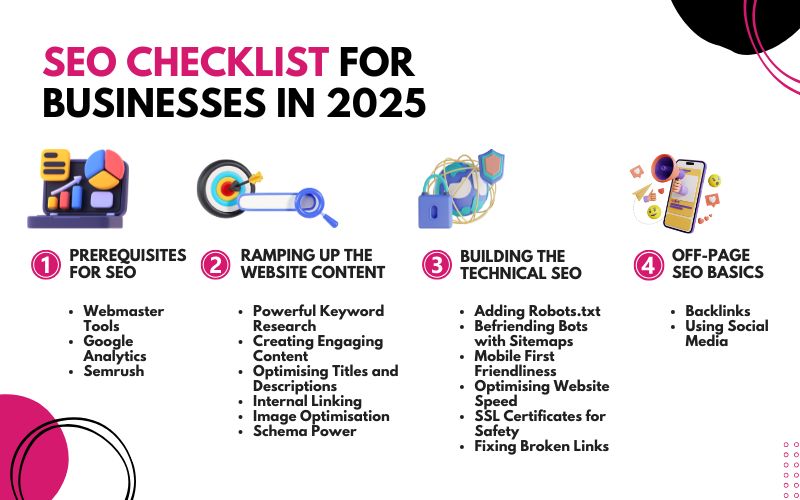
Prerequisites For SEO
Webmaster Tools
Webmaster Tools, now known as Google Search Console, is a free service offered by Google to website owners. It acts as a toolbox for optimising your website's visibility and performance in search results.
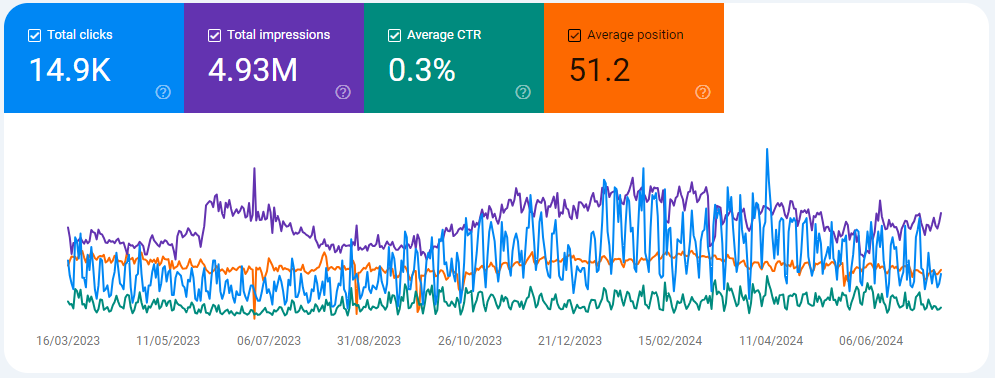
It helps boost your website's technical SEO, keyword insights, and mobile usability. Additionally, it can provide you with search traffic reports and address potential problems that could affect your website's SEO and performance.
Google Analytics
An extremely helpful yet free-to-use analytics tool, Google Analytics goes beyond just SEO. It provides a wealth of data about your website traffic and visitor behavior, which can be incredibly useful for informing and improving your SEO strategy.
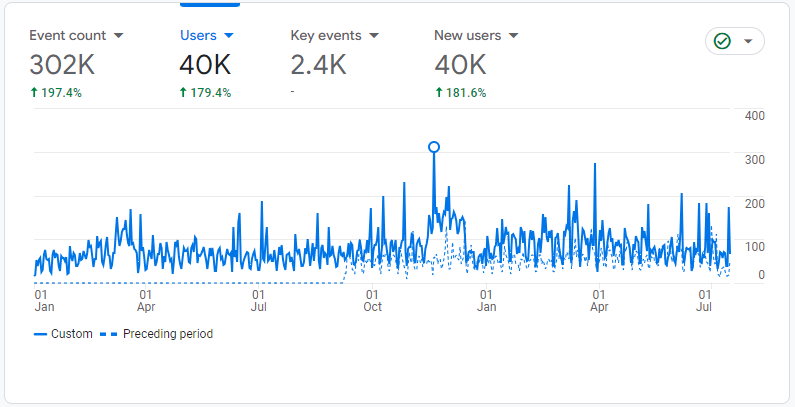
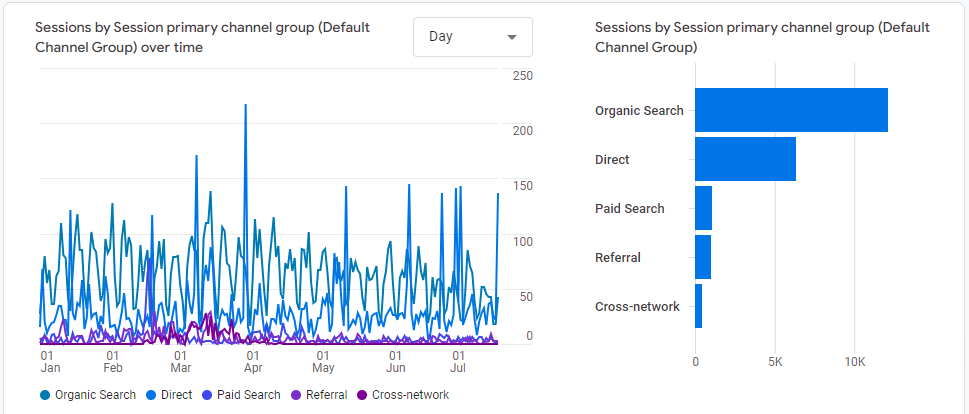
Using this helps you unlock and understand potential traffic sources, identify top-performing pages, analyse user behaviour, and track keyword performance. You can also monitor your existing SEO efforts and optimise their performance with this tool.
Semrush
One of the most comprehensive SEO tools in the market, Semrush is a must-have when setting up your business's SEO checklist.
Its salient features include comprehensive keyword research, on-page SEO optimisation, thorough competitor analysis, effective content marketing strategies, link building, and search engine rank tracking.
It also has social media management capabilities to streamline your current SEO efforts.
Ramping Up the Website Content
Powerful Keyword Research
Understanding what people are searching for is the treasure map to SEO success. Keyword research helps you identify relevant search terms with good search volume.
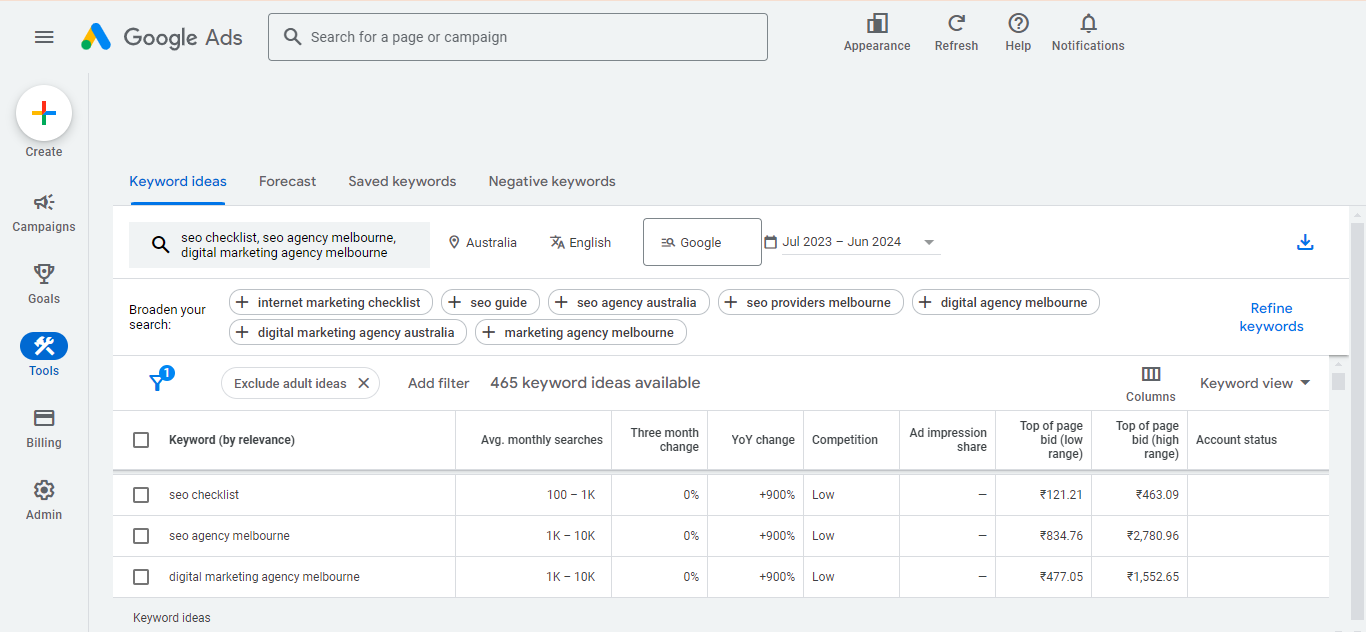
By adding these keywords strategically into your content, you increase the chances of your website appearing in search results for those terms, attracting your targeted audience.
Creating Engaging Content
Forget dry, keyword-stuffed articles. Search engines and your readers crave informative, engaging content that solves their problems and provides value.
As such, focus on creating long-form, well-structured content establishing you as an industry leader. This not only improves SEO but also builds trust and positions you as a thought leader.
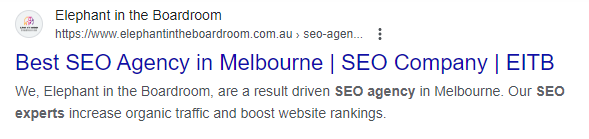
Optimising Titles and Descriptions
Your website title and meta description serve as your shop window on the search engine results page (SERP). Craft clear, concise titles and descriptions that provide information and include your target keywords. Think of them as enticing headlines that will grab users' attention and encourage them to click through to your website.
Internal Linking
Internal linking is like creating a web within your website. By strategically linking relevant pages to each other, you help users navigate your content easily and give search engines a clearer picture of your website's structure and content hierarchy. This can improve user experience and potentially boost your SEO ranking.
Image Optimisation
Image optimisation involves fine-tuning images for both search engines and website visitors. You reduce its file size for faster loading times, using descriptive file names and captions, and adding relevant alt text that describes the image content.
By making images easier for search engines to understand, you increase the chances of your website and the images ranking higher in search results. Faster loading times also improve user experience, another factor search engines consider for ranking.
Schema Power
Schema markup sounds like a new SEO term, but this is just like adding subtitles to your webpages for search engines. It helps them understand the specific content type (ex., recipe, product, event), leading to richer search results.
For instance, schema markup for a recipe might include ingredients, cooking time, and calories. This can entice users with more informative snippets in search results and potentially lead to more clicks.
Building the Technical SEO
When it comes to building a robust online presence, nailing down the technical aspects of SEO is a must. Here are the essentials of a strong technical SEO checklist:
Adding Robots.txt
Robots.txt is a text file on a website that guides web robots, particularly search engine crawlers. It tells these crawlers which pages on the website they can access, and those that they shouldn't.
Here are some key points about robots.txt:
- Function: It helps manage how search engines crawl your site and can be used to prevent crawlers from overloading your server or indexing unimportant pages.
- Not for hiding content: While you can instruct crawlers not to access certain pages, robots.txt doesn't guarantee those pages won't be found by search engines. There are other methods for true privacy control.
- Focus on good bots: It's mainly followed by well-behaved search engine crawlers, not malicious bots that might disregard the instructions.
Befriending Bots with Sitemaps
Search engine bots crawl your website to understand its content and structure. That's why having a clean, well-structured sitemap helps them efficiently discover and index all your important pages. This uncovers your amazing content so it gets seen by the right people.
Mobile First Friendliness
Imagine a potential customer trying to reach your website on their phone, only to be greeted by a clunky, non-mobile-friendly experience. They'll likely bounce and head straight to your competitor.
Google prioritises mobile-friendly sites in search results, and your business website should have it too. Ensure it provides a seamless mobile experience as it's crucial for attracting visitors and boosting SEO.
Optimising Website Speed
We've all experienced the frustration of a slow-loading website. In 2025, your users expect lightning-fast speeds, so you must give it to them.
Fastening up your website's speed improves user experience (UX) and sends positive signals to search engines, potentially improving the ranking and searchability of your business.
SSL Certificates for Safety
Just like you wouldn't want your house unlocked, you don't want your business website vulnerable to hacking and identity theft.
An SSL certificate encrypts data and shows visitors (and search engines) you take security seriously. From there, you build trust and give a safe browsing experience for your future customers.
Fixing Broken Links
Nothing disrupts the user experience and hurts SEO quite like clicking a link that leads to nowhere.
Regularly checking for broken links and fixing them demonstrates professionalism and ensures visitors can navigate your website seamlessly.
Off-Page SEO Checklist
Backlinks For Credibility
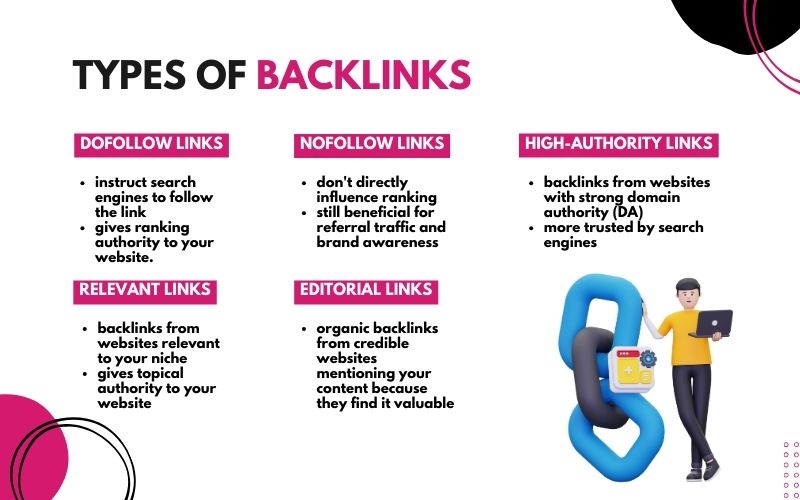
Earning backlinks from reputable websites in your industry is a goldmine for your business's SEO. Search engines see these backlinks as a sign of trust and credibility, potentially boosting your ranking in search results.
Backlinks can be classified as follows:
- Dofollow and Nofollow Links: Dofollow links instruct search engines to follow the link and potentially pass on ranking authority to your website. Nofollow links don't directly influence ranking but can still be beneficial for referral traffic and brand awareness.
- High-Authority Links: Backlinks from websites with strong domain authority (DA) are more valuable than those from low-authority sites. High-DA sites are seen as more trustworthy by search engines, so their links carry more weight. The best example for those kind of links are Guest Post Backlinks.
- Relevant Links: Backlinks from websites relevant to your niche are more valuable than those from unrelated sites. This shows search engines your website is a topical authority.
- Editorial Links: These are organic backlinks from credible websites that mention your content because they find it valuable. They are the gold standard of backlinks.
To build backlinks, you won’t ask for it right away. Create and write link-worthy content, write guest blogs on relevant sites, and build relationships with industry influencers.
Using Social Media
While social media signals don't directly impact search engine ranking algorithms, they can still play a supporting role in SEO.
To do so, share your high-quality content on social media platforms, engage with your audience, and build brand awareness. This can drive targeted traffic back to your website and potentially improve your overall online presence.
SEO Checklist: Bonus SEO Strategies for 2025
Local SEO Focus
If your business has a physical location, local SEO is essential. Optimise your Google My Business listing, manage online reviews, and target location-specific keywords to attract customers in your area. This can put your business at the forefront of local searches.
Technical SEO for Voice Search
With the rise of voice search assistants like Siri and Alexa, optimising your business website for voice queries is becoming increasingly important.
Seek long-tail keywords and natural language phrasing to ensure your website is discoverable through voice searches. For instance, instead of targeting 'restaurants,' which is a broader term, target more specific keywords like 'best Italian restaurants near me.'
Let Your Business Lead With SEO!
Now, you've seen how crucial SEO is for your business. But this isn't something that delivers results overnight. However, by consistently implementing these on-page, off-page, and technical strategies using this SEO checklist, you'll build a strong foundation for long-term SEO success.
Feeling overwhelmed? Don't go it alone! The SEO experts at Elephant in the Boardroom can be your guide through the SEO jungle. We'll help you craft a winning SEO strategy, optimise your website and build a strong online presence.
Contact Elephant in the Boardroom, one of the best SEO agency in Melbourne today for a free SEO consultation and watch your business climb the search engine rankings!
SEO – the magic three-letter acronym essential for ensuring you get noticed online like 70% of your fellow businesses. However, for many business owners, it can seem like an intricate web of algorithms, keywords and ever-changing rules that's just too complicated to tackle. That’s why we’ve put together the ultimate SEO checklist.
Imagine having a brilliant store in the busiest part of town, but no signboard to let people know it exists. That’s your website without SEO. SEO can make the difference between being seen by your target audience and getting lost in the vast sea of online content.
But where should you start in this SEO maze?
We present to you our reliable SEO checklist for 2025! Tune in as we break down everything you need to know, from technical SEO to off-page optimisation strategies, to help your business dominate the competition.
What’s Inside:
- Why Your Business Needs SEO
- Types of SEO For Your Business
- SEO Checklist for Businesses in 2025
- SEO Checklist: Bonus Strategies for 2025
- Let Your Business Lead With SEO!
Why Does Your Business Need SEO?
In 2025, having a strong SEO strategy is no longer optional for your business; it's a fundamental necessity. Why does your business need it? Here are some reasons to convince you! Our comprehensive SEO checklist ensures you stay on top of the best practices.
Online Shopping Dominance
With online shopping continuing its explosive growth, consumers are turning to search engines more than ever to find the products and services they need. If your business isn't ranking high in search results, you're missing out on a massive chunk of potential customers.
Building Brand Awareness and Credibility
Ranking well in search engines positions your business as an authority in your industry. Your potential customers think of your business as a trustworthy one to deal with over competitors.
Targeted Audience and Cost-Effective Reach
SEO lets you target your ideal customers with laser precision by focusing on relevant keywords. This organic traffic is much more cost effective than traditional advertising methods.
Long Term Growth
You might not know it yet, but banking on SEO is a long-term investment that delivers sustainable results. Unlike paid advertising which stops when the budget runs out, SEO keeps your website visible and working for you 24/7.
Types of SEO For Your Business
Now that you know why your business needs SEO, it's time to unlock what types of SEO fit your business needs best. By using a comprehensive SEO checklist, you can determine whether on-page SEO, off-page SEO, or technical SEO—or a combination of all three—will most effectively drive traffic to your site and improve your search engine rankings.
On-Page SEO
This focuses on optimising your business website itself to be search engine friendly and more useful to your visitors. Prioritise the following when doing on-page SEO:
- Technical SEO: Make sure your website is mobile-friendly, loads quickly, and has a clean structure with a healthy sitemap.
- Content Optimization: Create high-quality, informative content that targets relevant keywords and provides value to your audience. This includes optimising titles, meta descriptions, and internal linking.
Off-Page SEO
Off-page SEO, on the other hand, puts forward your website's authority and credibility in the eyes of search engines. Here's what matters most:
- Link Building. Earning backlinks from high-quality, relevant websites is a crucial factor in SEO success. Evaluate the domain authority of a potential site with the help of DA PA checker, ensuring that you secure backlinks from both trustworthy and high-authority sources. Focus on creating link-worthy content and building relationships with industry influencers.
Additionally, in 2025, there are two emerging SEO areas to keep on your radar.
Local SEO
If you have a brick-and-mortar presence, local SEO is essential. Power up your Google My Business listing, manage online reviews, and target location-specific keywords to attract local customers. This helps your customers within the area locate your store easily.
Technical SEO for Voice Search
With the rise of voice search, prepping up your website for voice queries is more crucial than ever. Focus on long-tail keywords and natural language phrasing to ensure your website is discoverable through voice assistants.
SEO Checklist for Businesses in 2025
Prerequisites For SEO
Webmaster Tools
Webmaster Tools, now known as Google Search Console, is a free service offered by Google to website owners. It acts as a toolbox for optimising your website's visibility and performance in search results.
It helps boost your website's technical SEO, keyword insights, and mobile usability. Additionally, it can provide you with search traffic reports and address potential problems that could affect your website's SEO and performance.
Google Analytics
An extremely helpful yet free-to-use analytics tool, Google Analytics goes beyond just SEO. It provides a wealth of data about your website traffic and visitor behavior, which can be incredibly useful for informing and improving your SEO strategy.
Using this helps you unlock and understand potential traffic sources, identify top-performing pages, analyse user behaviour, and track keyword performance. You can also monitor your existing SEO efforts and optimise their performance with this tool.
Semrush
One of the most comprehensive SEO tools in the market, Semrush is a must-have when setting up your business's SEO checklist.
Its salient features include comprehensive keyword research, on-page SEO optimisation, thorough competitor analysis, effective content marketing strategies, link building, and search engine rank tracking.
It also has social media management capabilities to streamline your current SEO efforts.
Ramping Up the Website Content
Powerful Keyword Research
Understanding what people are searching for is the treasure map to SEO success. Keyword research helps you identify relevant search terms with good search volume.
By adding these keywords strategically into your content, you increase the chances of your website appearing in search results for those terms, attracting your targeted audience.
Creating Engaging Content
Forget dry, keyword-stuffed articles. Search engines and your readers crave informative, engaging content that solves their problems and provides value.
As such, focus on creating long-form, well-structured content establishing you as an industry leader. This not only improves SEO but also builds trust and positions you as a thought leader.
Optimising Titles and Descriptions
Your website title and meta description serve as your shop window on the search engine results page (SERP). Craft clear, concise titles and descriptions that provide information and include your target keywords. Think of them as enticing headlines that will grab users' attention and encourage them to click through to your website.
Internal Linking
Internal linking is like creating a web within your website. By strategically linking relevant pages to each other, you help users navigate your content easily and give search engines a clearer picture of your website's structure and content hierarchy. This can improve user experience and potentially boost your SEO ranking.
Image Optimisation
Image optimisation involves fine-tuning images for both search engines and website visitors. You reduce its file size for faster loading times, using descriptive file names and captions, and adding relevant alt text that describes the image content.
By making images easier for search engines to understand, you increase the chances of your website and the images ranking higher in search results. Faster loading times also improve user experience, another factor search engines consider for ranking.
Schema Power
Schema markup sounds like a new SEO term, but this is just like adding subtitles to your webpages for search engines. It helps them understand the specific content type (ex., recipe, product, event), leading to richer search results.
For instance, schema markup for a recipe might include ingredients, cooking time, and calories. This can entice users with more informative snippets in search results and potentially lead to more clicks.
Building the Technical SEO
When it comes to building a robust online presence, nailing down the technical aspects of SEO is a must. Here are the essentials of a strong technical SEO checklist:
Adding Robots.txt
Robots.txt is a text file on a website that guides web robots, particularly search engine crawlers. It tells these crawlers which pages on the website they can access, and those that they shouldn't.
Here are some key points about robots.txt:
- Function: It helps manage how search engines crawl your site and can be used to prevent crawlers from overloading your server or indexing unimportant pages.
- Not for hiding content: While you can instruct crawlers not to access certain pages, robots.txt doesn't guarantee those pages won't be found by search engines. There are other methods for true privacy control.
- Focus on good bots: It's mainly followed by well-behaved search engine crawlers, not malicious bots that might disregard the instructions.
Befriending Bots with Sitemaps
Search engine bots crawl your website to understand its content and structure. That's why having a clean, well-structured sitemap helps them efficiently discover and index all your important pages. This uncovers your amazing content so it gets seen by the right people.
Mobile First Friendliness
Imagine a potential customer trying to reach your website on their phone, only to be greeted by a clunky, non-mobile-friendly experience. They'll likely bounce and head straight to your competitor.
Google prioritises mobile-friendly sites in search results, and your business website should have it too. Ensure it provides a seamless mobile experience as it's crucial for attracting visitors and boosting SEO.
Optimising Website Speed
We've all experienced the frustration of a slow-loading website. In 2025, your users expect lightning-fast speeds, so you must give it to them.
Fastening up your website's speed improves user experience (UX) and sends positive signals to search engines, potentially improving the ranking and searchability of your business.
SSL Certificates for Safety
Just like you wouldn't want your house unlocked, you don't want your business website vulnerable to hacking and identity theft.
An SSL certificate encrypts data and shows visitors (and search engines) you take security seriously. From there, you build trust and give a safe browsing experience for your future customers.
Fixing Broken Links
Nothing disrupts the user experience and hurts SEO quite like clicking a link that leads to nowhere.
Regularly checking for broken links and fixing them demonstrates professionalism and ensures visitors can navigate your website seamlessly.
Off-Page SEO Checklist
Backlinks For Credibility
Earning backlinks from reputable websites in your industry is a goldmine for your business's SEO. Search engines see these backlinks as a sign of trust and credibility, potentially boosting your ranking in search results.
Backlinks can be classified as follows:
- Dofollow and Nofollow Links: Dofollow links instruct search engines to follow the link and potentially pass on ranking authority to your website. Nofollow links don't directly influence ranking but can still be beneficial for referral traffic and brand awareness.
- High-Authority Links: Backlinks from websites with strong domain authority (DA) are more valuable than those from low-authority sites. High-DA sites are seen as more trustworthy by search engines, so their links carry more weight. The best example for those kind of links are Guest Post Backlinks.
- Relevant Links: Backlinks from websites relevant to your niche are more valuable than those from unrelated sites. This shows search engines your website is a topical authority.
- Editorial Links: These are organic backlinks from credible websites that mention your content because they find it valuable. They are the gold standard of backlinks.
To build backlinks, you won’t ask for it right away. Create and write link-worthy content, write guest blogs on relevant sites, and build relationships with industry influencers.
Using Social Media
While social media signals don't directly impact search engine ranking algorithms, they can still play a supporting role in SEO.
To do so, share your high-quality content on social media platforms, engage with your audience, and build brand awareness. This can drive targeted traffic back to your website and potentially improve your overall online presence.
SEO Checklist: Bonus SEO Strategies for 2025
Local SEO Focus
If your business has a physical location, local SEO is essential. Optimise your Google My Business listing, manage online reviews, and target location-specific keywords to attract customers in your area. This can put your business at the forefront of local searches.
Technical SEO for Voice Search
With the rise of voice search assistants like Siri and Alexa, optimising your business website for voice queries is becoming increasingly important.
Seek long-tail keywords and natural language phrasing to ensure your website is discoverable through voice searches. For instance, instead of targeting 'restaurants,' which is a broader term, target more specific keywords like 'best Italian restaurants near me.'
Let Your Business Lead With SEO!
Now, you've seen how crucial SEO is for your business. But this isn't something that delivers results overnight. However, by consistently implementing these on-page, off-page, and technical strategies using this SEO checklist, you'll build a strong foundation for long-term SEO success.
Feeling overwhelmed? Don't go it alone! The SEO experts at Elephant in the Boardroom can be your guide through the SEO jungle. We'll help you craft a winning SEO strategy, optimise your website and build a strong online presence.
Contact Elephant in the Boardroom, one of the best SEO agency in Melbourne today for a free SEO consultation and watch your business climb the search engine rankings!






4.4 rating from 30 Google reviews