
Google processes over 5.5 billion searches every single day, with 92% of web traffic going to results on the first page. This reality highlights the fierce competition for visibility in today’s digital landscape. To stand out, businesses and creators need more than just great ideas, they need SEO copywriting strategies that strike the perfect balance between appealing to search engines and engaging their audience.
If you are ready to boost your content's performance and climb the rankings, you are in the right place. We will explore SEO copywriting strategies that combine the technical know-how of optimisation with the art of persuasive storytelling. From writing content that resonates to implementing techniques that boost rankings, you will discover how to create work that not only gets found but also leaves a lasting impact.
What’s Inside:
- Traditional Copywriting vs SEO Copywriting
- Why Is SEO Copywriting Important?
- SEO Copywriting Strategies: Optimising Content for People and Search Engines
- Master SEO Copywriting Strategies for Success
Traditional Copywriting vs SEO Copywriting
Traditional copywriting and SEO copywriting serve distinct yet interconnected purposes. Traditional copywriting prioritises creativity, emotional resonance, and brand voice to make a lasting impression on the audience.
While maintaining those principles, SEO copywriting takes it a step further by optimising content for search engines. It is about blending compelling storytelling with strategic use of keywords and formatting techniques like headers, meta descriptions, and internal links. The goal is to rank higher in search engine results, increasing visibility and attracting organic traffic.
Both forms of copywriting aim to connect with readers, but SEO copywriting has the added layer of appealing to algorithms, ensuring that the content not only resonates with humans but also aligns with the technical requirements of online platforms.
Why Is SEO Copywriting Important?
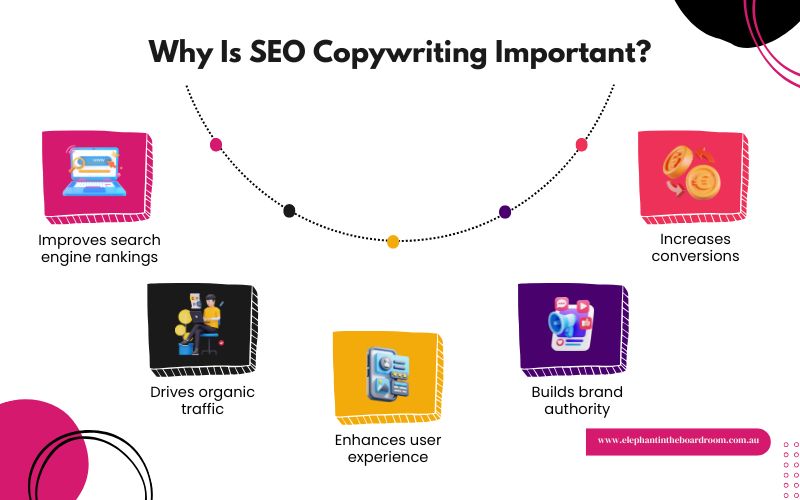
SEO copywriting is important for businesses looking to improve their online visibility and attract more customers. Before we discuss SEO copywriting strategies, let's first explore why it's so important for your business success:
Improves Search Engine Rankings
SEO copywriting helps optimise content with the right keywords, making it easier for search engines like Google to find and rank your website higher.
Drives Organic Traffic
When you optimise your content with the right keywords and structure, you attract readers who are actively searching for solutions, products, or insights you offer. This means the traffic you drive to your website is not random, it is targeted, making it far more valuable.
Enhances User Experience
Good SEO copywriting isn't just about stuffing keywords into your content, it is about making it readable, useful, and appealing. Well-crafted, optimised content improves user engagement, keeps readers on your page longer, and encourages them to explore further.
Builds Brand Authority
Regularly publishing high-quality, keyword-optimised content positions your business as an authority in your field, boosting trust among potential customers.
Increases Conversions
By creating content that answers questions, solves problems, and includes strong calls to action, SEO copywriting helps turn website visitors into customers.
SEO Copywriting Strategies: Optimising Content for People and Search Engines
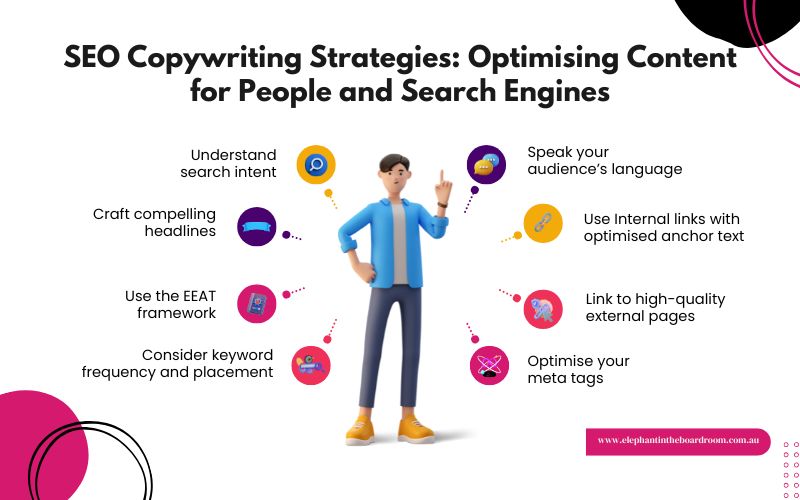
you begin crafting content, it is important to understand why people are searching for particular terms. What is driving their search? Are they seeking information, browsing for options, or ready to make a purchase?
Search intent generally falls into four main categories: informational, navigational, transactional, and commercial investigation.
- Informational Intent- This is when users are searching purely to learn something or gather knowledge, without any immediate plan to buy or take further action.
- Navigational Intent- Here, users are aiming to locate a specific website or page. They already know where they want to go but use search engines as a shortcut.
- Transactional Intent- When users have transactional intent, they are ready to take a specific action, whether it is making a purchase, signing up for a service, or downloading an app.
- Commercial Investigation Intent- These users are close to making a decision but are still weighing up their options. They might be comparing products, reading reviews, or hunting for the best deal.
Craft Compelling Headlines
Your headline serves as the first impression of your content, and it plays an important role in both user engagement and search engine ranking. To craft a headline that resonates with your audience and optimises for search engines, consider these key points:
- Be clear and informative- The headline should immediately communicate what the article is about while incorporating target keywords naturally.
- Spark curiosity or address a pain point- Headlines that promise a solution to a specific problem or offer a unique perspective tend to attract more clicks.
- Keep it under 60 characters- Headlines longer than 60 characters may get truncated in search engine results.
Let's have an example headline:
5 Ways to Grow Your Business in Australia Through Social Media
This headline is clear, informative, and to the point. It offers actionable tips ("5 Ways") and specifies the target audience (business owners in Australia). The mention of "Social Media" not only makes it relevant to current marketing trends but also targets a specific, high-volume keyword. It also stays within the optimal character length to ensure it isn't cut off in search results.
Use the EEAT Framework
This approach ensures your content is not only highly valued by search engines but also resonates with your audience. Here's how to leverage EEAT effectively:
- Demonstrate expertise- Showcase your knowledge of the subject matter by sharing accurate, insightful, and up-to-date information.
For example, If you are writing about personal finance, explain complex topics like "compound interest" in a simple yet authoritative way.
- Leverage real experience- Readers trust content grounded in real-life experience. Incorporating anecdotes, case studies, or personal stories can make your content more relatable and credible.
For example, writing a guide on renovating a kitchen? Share a personal or client example, such as how you chose cost-effective materials and overcame common challenges like unexpected plumbing issues.
Consider Keyword Frequency and Placement
Strategic keyword placement remains a cornerstone of SEO copywriting. Integrate primary keywords in key locations such as:
- Headlines- Ensure your headline conveys value while incorporating your target keyword.
- Subheadings- Break up your content with keyword-rich subheadings that improve readability.
- Opening paragraph- Include your keyword naturally within the first 100 words to establish topical relevance.
Speak Your Audience’s Language
Using terminology your audience understands is key. Avoid industry jargon unless you are addressing experts who value technical precision. Instead, focus on using clear, accessible language that aligns with their knowledge level and interests.
For example, if you are writing about fitness products for Gen Z, you wouldn’t say: "Our performance-enhancing supplements are formulated with cutting-edge bioactive compounds to optimise athletic recovery."
Instead, try: "Need faster recovery after your workouts? Our supplements are packed with natural ingredients to help your muscles bounce back, so you can hit it hard again tomorrow."
Gen Z appreciates clear, direct language that speaks to their lifestyle and concerns. They are often looking for products or tips that make their lives easier, more sustainable, or more fun.
Use Internal Links With Optimised Anchor Text
Guide readers through your site by linking to relevant pages using descriptive anchor text. Instead of using generic anchor text like "click here", use descriptive phrases that provide both context and value to your readers.
Instead of saying: "For more information about the best practices for website accessibility, click here."
You could write: "To discover the best practices for improving website accessibility and ensure your site is user-friendly for all visitors, check out our detailed guide.”
Link to High-Quality External Pages
Make sure the external sources you use are reliable and relevant. Search engines are informed that your content has been carefully examined when you link to reliable websites. Also, it benefits your viewers by offering more reliable resources.
For example, if your content discusses climate change, you could link to a government body or a well-established environmental organisation like The Australian Conservation Foundation or Climate Council.
Optimise Your Meta Tags
Your meta title and description are the first thing searchers see when they come across your page in search results. While meta tags themselves don’t directly impact rankings they improve your click-through rates, which can indirectly influence your search engine performance.
For example, your meta title is "Website Audit Checklist for the New Year | Boost Your SEO in 2024"
Meta Description: Ready to kick off the new year with a fresh website audit? Our comprehensive checklist helps you optimise your site for better SEO performance and user experience in 2024. Start today!
By including targeted keywords like "Website Audit," "SEO," and "New Year," and offering a clear value proposition, these meta tags not only align with search intent but also encourage users to click through to your content.
Master SEO Copywriting Strategies for Success
Now that you've uncovered the strategies behind effective SEO copywriting, it is time to put them into action. From crafting engaging headlines to weaving in keywords seamlessly, each step you take towards optimising your content will make a significant difference in how your audience and search engines perceive your site. Consistency is key, so stay committed to refining your content, and soon you will notice your rankings climbing higher and your engagement levels soaring.
We are here to help you refine your SEO copywriting skills with the best SEO copywriting strategies and turn your digital presence into a powerhouse. Contact us today, and let’s start creating content that speaks to both your audience and search engines, driving sustainable traffic and long-term growth. Together, we can make your content work harder for you.
Google processes over 5.5 billion searches every single day, with 92% of web traffic going to results on the first page. This reality highlights the fierce competition for visibility in today’s digital landscape. To stand out, businesses and creators need more than just great ideas, they need SEO copywriting strategies that strike the perfect balance between appealing to search engines and engaging their audience.
If you are ready to boost your content's performance and climb the rankings, you are in the right place. We will explore SEO copywriting strategies that combine the technical know-how of optimisation with the art of persuasive storytelling. From writing content that resonates to implementing techniques that boost rankings, you will discover how to create work that not only gets found but also leaves a lasting impact.
What’s Inside:
- Traditional Copywriting vs SEO Copywriting
- Why Is SEO Copywriting Important?
- SEO Copywriting Strategies: Optimising Content for People and Search Engines
- Master SEO Copywriting Strategies for Success
Traditional Copywriting vs SEO Copywriting
Traditional copywriting and SEO copywriting serve distinct yet interconnected purposes. Traditional copywriting prioritises creativity, emotional resonance, and brand voice to make a lasting impression on the audience.
While maintaining those principles, SEO copywriting takes it a step further by optimising content for search engines. It is about blending compelling storytelling with strategic use of keywords and formatting techniques like headers, meta descriptions, and internal links. The goal is to rank higher in search engine results, increasing visibility and attracting organic traffic.
Both forms of copywriting aim to connect with readers, but SEO copywriting has the added layer of appealing to algorithms, ensuring that the content not only resonates with humans but also aligns with the technical requirements of online platforms.
Why Is SEO Copywriting Important?
SEO copywriting is important for businesses looking to improve their online visibility and attract more customers. Before we discuss SEO copywriting strategies, let's first explore why it's so important for your business success:
Improves Search Engine Rankings
SEO copywriting helps optimise content with the right keywords, making it easier for search engines like Google to find and rank your website higher.
Drives Organic Traffic
When you optimise your content with the right keywords and structure, you attract readers who are actively searching for solutions, products, or insights you offer. This means the traffic you drive to your website is not random, it is targeted, making it far more valuable.
Enhances User Experience
Good SEO copywriting isn't just about stuffing keywords into your content, it is about making it readable, useful, and appealing. Well-crafted, optimised content improves user engagement, keeps readers on your page longer, and encourages them to explore further.
Builds Brand Authority
Regularly publishing high-quality, keyword-optimised content positions your business as an authority in your field, boosting trust among potential customers.
Increases Conversions
By creating content that answers questions, solves problems, and includes strong calls to action, SEO copywriting helps turn website visitors into customers.
SEO Copywriting Strategies: Optimising Content for People and Search Engines
you begin crafting content, it is important to understand why people are searching for particular terms. What is driving their search? Are they seeking information, browsing for options, or ready to make a purchase?
Search intent generally falls into four main categories: informational, navigational, transactional, and commercial investigation.
- Informational Intent- This is when users are searching purely to learn something or gather knowledge, without any immediate plan to buy or take further action.
- Navigational Intent- Here, users are aiming to locate a specific website or page. They already know where they want to go but use search engines as a shortcut.
- Transactional Intent- When users have transactional intent, they are ready to take a specific action, whether it is making a purchase, signing up for a service, or downloading an app.
- Commercial Investigation Intent- These users are close to making a decision but are still weighing up their options. They might be comparing products, reading reviews, or hunting for the best deal.
Craft Compelling Headlines
Your headline serves as the first impression of your content, and it plays an important role in both user engagement and search engine ranking. To craft a headline that resonates with your audience and optimises for search engines, consider these key points:
- Be clear and informative- The headline should immediately communicate what the article is about while incorporating target keywords naturally.
- Spark curiosity or address a pain point- Headlines that promise a solution to a specific problem or offer a unique perspective tend to attract more clicks.
- Keep it under 60 characters- Headlines longer than 60 characters may get truncated in search engine results.
Let's have an example headline:
5 Ways to Grow Your Business in Australia Through Social Media
This headline is clear, informative, and to the point. It offers actionable tips ("5 Ways") and specifies the target audience (business owners in Australia). The mention of "Social Media" not only makes it relevant to current marketing trends but also targets a specific, high-volume keyword. It also stays within the optimal character length to ensure it isn't cut off in search results.
Use the EEAT Framework
This approach ensures your content is not only highly valued by search engines but also resonates with your audience. Here's how to leverage EEAT effectively:
- Demonstrate expertise- Showcase your knowledge of the subject matter by sharing accurate, insightful, and up-to-date information.
For example, If you are writing about personal finance, explain complex topics like "compound interest" in a simple yet authoritative way.
- Leverage real experience- Readers trust content grounded in real-life experience. Incorporating anecdotes, case studies, or personal stories can make your content more relatable and credible.
For example, writing a guide on renovating a kitchen? Share a personal or client example, such as how you chose cost-effective materials and overcame common challenges like unexpected plumbing issues.
Consider Keyword Frequency and Placement
Strategic keyword placement remains a cornerstone of SEO copywriting. Integrate primary keywords in key locations such as:
- Headlines- Ensure your headline conveys value while incorporating your target keyword.
- Subheadings- Break up your content with keyword-rich subheadings that improve readability.
- Opening paragraph- Include your keyword naturally within the first 100 words to establish topical relevance.
Speak Your Audience’s Language
Using terminology your audience understands is key. Avoid industry jargon unless you are addressing experts who value technical precision. Instead, focus on using clear, accessible language that aligns with their knowledge level and interests.
For example, if you are writing about fitness products for Gen Z, you wouldn’t say: "Our performance-enhancing supplements are formulated with cutting-edge bioactive compounds to optimise athletic recovery."
Instead, try: "Need faster recovery after your workouts? Our supplements are packed with natural ingredients to help your muscles bounce back, so you can hit it hard again tomorrow."
Gen Z appreciates clear, direct language that speaks to their lifestyle and concerns. They are often looking for products or tips that make their lives easier, more sustainable, or more fun.
Use Internal Links With Optimised Anchor Text
Guide readers through your site by linking to relevant pages using descriptive anchor text. Instead of using generic anchor text like "click here", use descriptive phrases that provide both context and value to your readers.
Instead of saying: "For more information about the best practices for website accessibility, click here."
You could write: "To discover the best practices for improving website accessibility and ensure your site is user-friendly for all visitors, check out our detailed guide.”
Link to High-Quality External Pages
Make sure the external sources you use are reliable and relevant. Search engines are informed that your content has been carefully examined when you link to reliable websites. Also, it benefits your viewers by offering more reliable resources.
For example, if your content discusses climate change, you could link to a government body or a well-established environmental organisation like The Australian Conservation Foundation or Climate Council.
Optimise Your Meta Tags
Your meta title and description are the first thing searchers see when they come across your page in search results. While meta tags themselves don’t directly impact rankings they improve your click-through rates, which can indirectly influence your search engine performance.
For example, your meta title is "Website Audit Checklist for the New Year | Boost Your SEO in 2024"
Meta Description: Ready to kick off the new year with a fresh website audit? Our comprehensive checklist helps you optimise your site for better SEO performance and user experience in 2024. Start today!
By including targeted keywords like "Website Audit," "SEO," and "New Year," and offering a clear value proposition, these meta tags not only align with search intent but also encourage users to click through to your content.
Master SEO Copywriting Strategies for Success
Now that you've uncovered the strategies behind effective SEO copywriting, it is time to put them into action. From crafting engaging headlines to weaving in keywords seamlessly, each step you take towards optimising your content will make a significant difference in how your audience and search engines perceive your site. Consistency is key, so stay committed to refining your content, and soon you will notice your rankings climbing higher and your engagement levels soaring.
We are here to help you refine your SEO copywriting skills with the best SEO copywriting strategies and turn your digital presence into a powerhouse. Contact us today, and let’s start creating content that speaks to both your audience and search engines, driving sustainable traffic and long-term growth. Together, we can make your content work harder for you.
Google processes over 5.5 billion searches every single day, with 92% of web traffic going to results on the first page. This reality highlights the fierce competition for visibility in today’s digital landscape. To stand out, businesses and creators need more than just great ideas, they need SEO copywriting strategies that strike the perfect balance between appealing to search engines and engaging their audience.
If you are ready to boost your content's performance and climb the rankings, you are in the right place. We will explore SEO copywriting strategies that combine the technical know-how of optimisation with the art of persuasive storytelling. From writing content that resonates to implementing techniques that boost rankings, you will discover how to create work that not only gets found but also leaves a lasting impact.
What’s Inside:
- Traditional Copywriting vs SEO Copywriting
- Why Is SEO Copywriting Important?
- SEO Copywriting Strategies: Optimising Content for People and Search Engines
- Master SEO Copywriting Strategies for Success
Traditional Copywriting vs SEO Copywriting
Traditional copywriting and SEO copywriting serve distinct yet interconnected purposes. Traditional copywriting prioritises creativity, emotional resonance, and brand voice to make a lasting impression on the audience.
While maintaining those principles, SEO copywriting takes it a step further by optimising content for search engines. It is about blending compelling storytelling with strategic use of keywords and formatting techniques like headers, meta descriptions, and internal links. The goal is to rank higher in search engine results, increasing visibility and attracting organic traffic.
Both forms of copywriting aim to connect with readers, but SEO copywriting has the added layer of appealing to algorithms, ensuring that the content not only resonates with humans but also aligns with the technical requirements of online platforms.
Why Is SEO Copywriting Important?
SEO copywriting is important for businesses looking to improve their online visibility and attract more customers. Before we discuss SEO copywriting strategies, let's first explore why it's so important for your business success:
Improves Search Engine Rankings
SEO copywriting helps optimise content with the right keywords, making it easier for search engines like Google to find and rank your website higher.
Drives Organic Traffic
When you optimise your content with the right keywords and structure, you attract readers who are actively searching for solutions, products, or insights you offer. This means the traffic you drive to your website is not random, it is targeted, making it far more valuable.
Enhances User Experience
Good SEO copywriting isn't just about stuffing keywords into your content, it is about making it readable, useful, and appealing. Well-crafted, optimised content improves user engagement, keeps readers on your page longer, and encourages them to explore further.
Builds Brand Authority
Regularly publishing high-quality, keyword-optimised content positions your business as an authority in your field, boosting trust among potential customers.
Increases Conversions
By creating content that answers questions, solves problems, and includes strong calls to action, SEO copywriting helps turn website visitors into customers.
SEO Copywriting Strategies: Optimising Content for People and Search Engines
you begin crafting content, it is important to understand why people are searching for particular terms. What is driving their search? Are they seeking information, browsing for options, or ready to make a purchase?
Search intent generally falls into four main categories: informational, navigational, transactional, and commercial investigation.
- Informational Intent- This is when users are searching purely to learn something or gather knowledge, without any immediate plan to buy or take further action.
- Navigational Intent- Here, users are aiming to locate a specific website or page. They already know where they want to go but use search engines as a shortcut.
- Transactional Intent- When users have transactional intent, they are ready to take a specific action, whether it is making a purchase, signing up for a service, or downloading an app.
- Commercial Investigation Intent- These users are close to making a decision but are still weighing up their options. They might be comparing products, reading reviews, or hunting for the best deal.
Craft Compelling Headlines
Your headline serves as the first impression of your content, and it plays an important role in both user engagement and search engine ranking. To craft a headline that resonates with your audience and optimises for search engines, consider these key points:
- Be clear and informative- The headline should immediately communicate what the article is about while incorporating target keywords naturally.
- Spark curiosity or address a pain point- Headlines that promise a solution to a specific problem or offer a unique perspective tend to attract more clicks.
- Keep it under 60 characters- Headlines longer than 60 characters may get truncated in search engine results.
Let's have an example headline:
5 Ways to Grow Your Business in Australia Through Social Media
This headline is clear, informative, and to the point. It offers actionable tips ("5 Ways") and specifies the target audience (business owners in Australia). The mention of "Social Media" not only makes it relevant to current marketing trends but also targets a specific, high-volume keyword. It also stays within the optimal character length to ensure it isn't cut off in search results.
Use the EEAT Framework
This approach ensures your content is not only highly valued by search engines but also resonates with your audience. Here's how to leverage EEAT effectively:
- Demonstrate expertise- Showcase your knowledge of the subject matter by sharing accurate, insightful, and up-to-date information.
For example, If you are writing about personal finance, explain complex topics like "compound interest" in a simple yet authoritative way.
- Leverage real experience- Readers trust content grounded in real-life experience. Incorporating anecdotes, case studies, or personal stories can make your content more relatable and credible.
For example, writing a guide on renovating a kitchen? Share a personal or client example, such as how you chose cost-effective materials and overcame common challenges like unexpected plumbing issues.
Consider Keyword Frequency and Placement
Strategic keyword placement remains a cornerstone of SEO copywriting. Integrate primary keywords in key locations such as:
- Headlines- Ensure your headline conveys value while incorporating your target keyword.
- Subheadings- Break up your content with keyword-rich subheadings that improve readability.
- Opening paragraph- Include your keyword naturally within the first 100 words to establish topical relevance.
Speak Your Audience’s Language
Using terminology your audience understands is key. Avoid industry jargon unless you are addressing experts who value technical precision. Instead, focus on using clear, accessible language that aligns with their knowledge level and interests.
For example, if you are writing about fitness products for Gen Z, you wouldn’t say: "Our performance-enhancing supplements are formulated with cutting-edge bioactive compounds to optimise athletic recovery."
Instead, try: "Need faster recovery after your workouts? Our supplements are packed with natural ingredients to help your muscles bounce back, so you can hit it hard again tomorrow."
Gen Z appreciates clear, direct language that speaks to their lifestyle and concerns. They are often looking for products or tips that make their lives easier, more sustainable, or more fun.
Use Internal Links With Optimised Anchor Text
Guide readers through your site by linking to relevant pages using descriptive anchor text. Instead of using generic anchor text like "click here", use descriptive phrases that provide both context and value to your readers.
Instead of saying: "For more information about the best practices for website accessibility, click here."
You could write: "To discover the best practices for improving website accessibility and ensure your site is user-friendly for all visitors, check out our detailed guide.”
Link to High-Quality External Pages
Make sure the external sources you use are reliable and relevant. Search engines are informed that your content has been carefully examined when you link to reliable websites. Also, it benefits your viewers by offering more reliable resources.
For example, if your content discusses climate change, you could link to a government body or a well-established environmental organisation like The Australian Conservation Foundation or Climate Council.
Optimise Your Meta Tags
Your meta title and description are the first thing searchers see when they come across your page in search results. While meta tags themselves don’t directly impact rankings they improve your click-through rates, which can indirectly influence your search engine performance.
For example, your meta title is "Website Audit Checklist for the New Year | Boost Your SEO in 2024"
Meta Description: Ready to kick off the new year with a fresh website audit? Our comprehensive checklist helps you optimise your site for better SEO performance and user experience in 2024. Start today!
By including targeted keywords like "Website Audit," "SEO," and "New Year," and offering a clear value proposition, these meta tags not only align with search intent but also encourage users to click through to your content.
Master SEO Copywriting Strategies for Success
Now that you've uncovered the strategies behind effective SEO copywriting, it is time to put them into action. From crafting engaging headlines to weaving in keywords seamlessly, each step you take towards optimising your content will make a significant difference in how your audience and search engines perceive your site. Consistency is key, so stay committed to refining your content, and soon you will notice your rankings climbing higher and your engagement levels soaring.
We are here to help you refine your SEO copywriting skills with the best SEO copywriting strategies and turn your digital presence into a powerhouse. Contact us today, and let’s start creating content that speaks to both your audience and search engines, driving sustainable traffic and long-term growth. Together, we can make your content work harder for you.
Google processes over 5.5 billion searches every single day, with 92% of web traffic going to results on the first page. This reality highlights the fierce competition for visibility in today’s digital landscape. To stand out, businesses and creators need more than just great ideas, they need SEO copywriting strategies that strike the perfect balance between appealing to search engines and engaging their audience.
If you are ready to boost your content's performance and climb the rankings, you are in the right place. We will explore SEO copywriting strategies that combine the technical know-how of optimisation with the art of persuasive storytelling. From writing content that resonates to implementing techniques that boost rankings, you will discover how to create work that not only gets found but also leaves a lasting impact.
What’s Inside:
- Traditional Copywriting vs SEO Copywriting
- Why Is SEO Copywriting Important?
- SEO Copywriting Strategies: Optimising Content for People and Search Engines
- Master SEO Copywriting Strategies for Success
Traditional Copywriting vs SEO Copywriting
Traditional copywriting and SEO copywriting serve distinct yet interconnected purposes. Traditional copywriting prioritises creativity, emotional resonance, and brand voice to make a lasting impression on the audience.
While maintaining those principles, SEO copywriting takes it a step further by optimising content for search engines. It is about blending compelling storytelling with strategic use of keywords and formatting techniques like headers, meta descriptions, and internal links. The goal is to rank higher in search engine results, increasing visibility and attracting organic traffic.
Both forms of copywriting aim to connect with readers, but SEO copywriting has the added layer of appealing to algorithms, ensuring that the content not only resonates with humans but also aligns with the technical requirements of online platforms.
Why Is SEO Copywriting Important?
SEO copywriting is important for businesses looking to improve their online visibility and attract more customers. Before we discuss SEO copywriting strategies, let's first explore why it's so important for your business success:
Improves Search Engine Rankings
SEO copywriting helps optimise content with the right keywords, making it easier for search engines like Google to find and rank your website higher.
Drives Organic Traffic
When you optimise your content with the right keywords and structure, you attract readers who are actively searching for solutions, products, or insights you offer. This means the traffic you drive to your website is not random, it is targeted, making it far more valuable.
Enhances User Experience
Good SEO copywriting isn't just about stuffing keywords into your content, it is about making it readable, useful, and appealing. Well-crafted, optimised content improves user engagement, keeps readers on your page longer, and encourages them to explore further.
Builds Brand Authority
Regularly publishing high-quality, keyword-optimised content positions your business as an authority in your field, boosting trust among potential customers.
Increases Conversions
By creating content that answers questions, solves problems, and includes strong calls to action, SEO copywriting helps turn website visitors into customers.
SEO Copywriting Strategies: Optimising Content for People and Search Engines
you begin crafting content, it is important to understand why people are searching for particular terms. What is driving their search? Are they seeking information, browsing for options, or ready to make a purchase?
Search intent generally falls into four main categories: informational, navigational, transactional, and commercial investigation.
- Informational Intent- This is when users are searching purely to learn something or gather knowledge, without any immediate plan to buy or take further action.
- Navigational Intent- Here, users are aiming to locate a specific website or page. They already know where they want to go but use search engines as a shortcut.
- Transactional Intent- When users have transactional intent, they are ready to take a specific action, whether it is making a purchase, signing up for a service, or downloading an app.
- Commercial Investigation Intent- These users are close to making a decision but are still weighing up their options. They might be comparing products, reading reviews, or hunting for the best deal.
Craft Compelling Headlines
Your headline serves as the first impression of your content, and it plays an important role in both user engagement and search engine ranking. To craft a headline that resonates with your audience and optimises for search engines, consider these key points:
- Be clear and informative- The headline should immediately communicate what the article is about while incorporating target keywords naturally.
- Spark curiosity or address a pain point- Headlines that promise a solution to a specific problem or offer a unique perspective tend to attract more clicks.
- Keep it under 60 characters- Headlines longer than 60 characters may get truncated in search engine results.
Let's have an example headline:
5 Ways to Grow Your Business in Australia Through Social Media
This headline is clear, informative, and to the point. It offers actionable tips ("5 Ways") and specifies the target audience (business owners in Australia). The mention of "Social Media" not only makes it relevant to current marketing trends but also targets a specific, high-volume keyword. It also stays within the optimal character length to ensure it isn't cut off in search results.
Use the EEAT Framework
This approach ensures your content is not only highly valued by search engines but also resonates with your audience. Here's how to leverage EEAT effectively:
- Demonstrate expertise- Showcase your knowledge of the subject matter by sharing accurate, insightful, and up-to-date information.
For example, If you are writing about personal finance, explain complex topics like "compound interest" in a simple yet authoritative way.
- Leverage real experience- Readers trust content grounded in real-life experience. Incorporating anecdotes, case studies, or personal stories can make your content more relatable and credible.
For example, writing a guide on renovating a kitchen? Share a personal or client example, such as how you chose cost-effective materials and overcame common challenges like unexpected plumbing issues.
Consider Keyword Frequency and Placement
Strategic keyword placement remains a cornerstone of SEO copywriting. Integrate primary keywords in key locations such as:
- Headlines- Ensure your headline conveys value while incorporating your target keyword.
- Subheadings- Break up your content with keyword-rich subheadings that improve readability.
- Opening paragraph- Include your keyword naturally within the first 100 words to establish topical relevance.
Speak Your Audience’s Language
Using terminology your audience understands is key. Avoid industry jargon unless you are addressing experts who value technical precision. Instead, focus on using clear, accessible language that aligns with their knowledge level and interests.
For example, if you are writing about fitness products for Gen Z, you wouldn’t say: "Our performance-enhancing supplements are formulated with cutting-edge bioactive compounds to optimise athletic recovery."
Instead, try: "Need faster recovery after your workouts? Our supplements are packed with natural ingredients to help your muscles bounce back, so you can hit it hard again tomorrow."
Gen Z appreciates clear, direct language that speaks to their lifestyle and concerns. They are often looking for products or tips that make their lives easier, more sustainable, or more fun.
Use Internal Links With Optimised Anchor Text
Guide readers through your site by linking to relevant pages using descriptive anchor text. Instead of using generic anchor text like "click here", use descriptive phrases that provide both context and value to your readers.
Instead of saying: "For more information about the best practices for website accessibility, click here."
You could write: "To discover the best practices for improving website accessibility and ensure your site is user-friendly for all visitors, check out our detailed guide.”
Link to High-Quality External Pages
Make sure the external sources you use are reliable and relevant. Search engines are informed that your content has been carefully examined when you link to reliable websites. Also, it benefits your viewers by offering more reliable resources.
For example, if your content discusses climate change, you could link to a government body or a well-established environmental organisation like The Australian Conservation Foundation or Climate Council.
Optimise Your Meta Tags
Your meta title and description are the first thing searchers see when they come across your page in search results. While meta tags themselves don’t directly impact rankings they improve your click-through rates, which can indirectly influence your search engine performance.
For example, your meta title is "Website Audit Checklist for the New Year | Boost Your SEO in 2024"
Meta Description: Ready to kick off the new year with a fresh website audit? Our comprehensive checklist helps you optimise your site for better SEO performance and user experience in 2024. Start today!
By including targeted keywords like "Website Audit," "SEO," and "New Year," and offering a clear value proposition, these meta tags not only align with search intent but also encourage users to click through to your content.
Master SEO Copywriting Strategies for Success
Now that you've uncovered the strategies behind effective SEO copywriting, it is time to put them into action. From crafting engaging headlines to weaving in keywords seamlessly, each step you take towards optimising your content will make a significant difference in how your audience and search engines perceive your site. Consistency is key, so stay committed to refining your content, and soon you will notice your rankings climbing higher and your engagement levels soaring.
We are here to help you refine your SEO copywriting skills with the best SEO copywriting strategies and turn your digital presence into a powerhouse. Contact us today, and let’s start creating content that speaks to both your audience and search engines, driving sustainable traffic and long-term growth. Together, we can make your content work harder for you.
Google processes over 5.5 billion searches every single day, with 92% of web traffic going to results on the first page. This reality highlights the fierce competition for visibility in today’s digital landscape. To stand out, businesses and creators need more than just great ideas, they need SEO copywriting strategies that strike the perfect balance between appealing to search engines and engaging their audience.
If you are ready to boost your content's performance and climb the rankings, you are in the right place. We will explore SEO copywriting strategies that combine the technical know-how of optimisation with the art of persuasive storytelling. From writing content that resonates to implementing techniques that boost rankings, you will discover how to create work that not only gets found but also leaves a lasting impact.
What’s Inside:
- Traditional Copywriting vs SEO Copywriting
- Why Is SEO Copywriting Important?
- SEO Copywriting Strategies: Optimising Content for People and Search Engines
- Master SEO Copywriting Strategies for Success
Traditional Copywriting vs SEO Copywriting
Traditional copywriting and SEO copywriting serve distinct yet interconnected purposes. Traditional copywriting prioritises creativity, emotional resonance, and brand voice to make a lasting impression on the audience.
While maintaining those principles, SEO copywriting takes it a step further by optimising content for search engines. It is about blending compelling storytelling with strategic use of keywords and formatting techniques like headers, meta descriptions, and internal links. The goal is to rank higher in search engine results, increasing visibility and attracting organic traffic.
Both forms of copywriting aim to connect with readers, but SEO copywriting has the added layer of appealing to algorithms, ensuring that the content not only resonates with humans but also aligns with the technical requirements of online platforms.
Why Is SEO Copywriting Important?
SEO copywriting is important for businesses looking to improve their online visibility and attract more customers. Before we discuss SEO copywriting strategies, let's first explore why it's so important for your business success:
Improves Search Engine Rankings
SEO copywriting helps optimise content with the right keywords, making it easier for search engines like Google to find and rank your website higher.
Drives Organic Traffic
When you optimise your content with the right keywords and structure, you attract readers who are actively searching for solutions, products, or insights you offer. This means the traffic you drive to your website is not random, it is targeted, making it far more valuable.
Enhances User Experience
Good SEO copywriting isn't just about stuffing keywords into your content, it is about making it readable, useful, and appealing. Well-crafted, optimised content improves user engagement, keeps readers on your page longer, and encourages them to explore further.
Builds Brand Authority
Regularly publishing high-quality, keyword-optimised content positions your business as an authority in your field, boosting trust among potential customers.
Increases Conversions
By creating content that answers questions, solves problems, and includes strong calls to action, SEO copywriting helps turn website visitors into customers.
SEO Copywriting Strategies: Optimising Content for People and Search Engines
you begin crafting content, it is important to understand why people are searching for particular terms. What is driving their search? Are they seeking information, browsing for options, or ready to make a purchase?
Search intent generally falls into four main categories: informational, navigational, transactional, and commercial investigation.
- Informational Intent- This is when users are searching purely to learn something or gather knowledge, without any immediate plan to buy or take further action.
- Navigational Intent- Here, users are aiming to locate a specific website or page. They already know where they want to go but use search engines as a shortcut.
- Transactional Intent- When users have transactional intent, they are ready to take a specific action, whether it is making a purchase, signing up for a service, or downloading an app.
- Commercial Investigation Intent- These users are close to making a decision but are still weighing up their options. They might be comparing products, reading reviews, or hunting for the best deal.
Craft Compelling Headlines
Your headline serves as the first impression of your content, and it plays an important role in both user engagement and search engine ranking. To craft a headline that resonates with your audience and optimises for search engines, consider these key points:
- Be clear and informative- The headline should immediately communicate what the article is about while incorporating target keywords naturally.
- Spark curiosity or address a pain point- Headlines that promise a solution to a specific problem or offer a unique perspective tend to attract more clicks.
- Keep it under 60 characters- Headlines longer than 60 characters may get truncated in search engine results.
Let's have an example headline:
5 Ways to Grow Your Business in Australia Through Social Media
This headline is clear, informative, and to the point. It offers actionable tips ("5 Ways") and specifies the target audience (business owners in Australia). The mention of "Social Media" not only makes it relevant to current marketing trends but also targets a specific, high-volume keyword. It also stays within the optimal character length to ensure it isn't cut off in search results.
Use the EEAT Framework
This approach ensures your content is not only highly valued by search engines but also resonates with your audience. Here's how to leverage EEAT effectively:
- Demonstrate expertise- Showcase your knowledge of the subject matter by sharing accurate, insightful, and up-to-date information.
For example, If you are writing about personal finance, explain complex topics like "compound interest" in a simple yet authoritative way.
- Leverage real experience- Readers trust content grounded in real-life experience. Incorporating anecdotes, case studies, or personal stories can make your content more relatable and credible.
For example, writing a guide on renovating a kitchen? Share a personal or client example, such as how you chose cost-effective materials and overcame common challenges like unexpected plumbing issues.
Consider Keyword Frequency and Placement
Strategic keyword placement remains a cornerstone of SEO copywriting. Integrate primary keywords in key locations such as:
- Headlines- Ensure your headline conveys value while incorporating your target keyword.
- Subheadings- Break up your content with keyword-rich subheadings that improve readability.
- Opening paragraph- Include your keyword naturally within the first 100 words to establish topical relevance.
Speak Your Audience’s Language
Using terminology your audience understands is key. Avoid industry jargon unless you are addressing experts who value technical precision. Instead, focus on using clear, accessible language that aligns with their knowledge level and interests.
For example, if you are writing about fitness products for Gen Z, you wouldn’t say: "Our performance-enhancing supplements are formulated with cutting-edge bioactive compounds to optimise athletic recovery."
Instead, try: "Need faster recovery after your workouts? Our supplements are packed with natural ingredients to help your muscles bounce back, so you can hit it hard again tomorrow."
Gen Z appreciates clear, direct language that speaks to their lifestyle and concerns. They are often looking for products or tips that make their lives easier, more sustainable, or more fun.
Use Internal Links With Optimised Anchor Text
Guide readers through your site by linking to relevant pages using descriptive anchor text. Instead of using generic anchor text like "click here", use descriptive phrases that provide both context and value to your readers.
Instead of saying: "For more information about the best practices for website accessibility, click here."
You could write: "To discover the best practices for improving website accessibility and ensure your site is user-friendly for all visitors, check out our detailed guide.”
Link to High-Quality External Pages
Make sure the external sources you use are reliable and relevant. Search engines are informed that your content has been carefully examined when you link to reliable websites. Also, it benefits your viewers by offering more reliable resources.
For example, if your content discusses climate change, you could link to a government body or a well-established environmental organisation like The Australian Conservation Foundation or Climate Council.
Optimise Your Meta Tags
Your meta title and description are the first thing searchers see when they come across your page in search results. While meta tags themselves don’t directly impact rankings they improve your click-through rates, which can indirectly influence your search engine performance.
For example, your meta title is "Website Audit Checklist for the New Year | Boost Your SEO in 2024"
Meta Description: Ready to kick off the new year with a fresh website audit? Our comprehensive checklist helps you optimise your site for better SEO performance and user experience in 2024. Start today!
By including targeted keywords like "Website Audit," "SEO," and "New Year," and offering a clear value proposition, these meta tags not only align with search intent but also encourage users to click through to your content.
Master SEO Copywriting Strategies for Success
Now that you've uncovered the strategies behind effective SEO copywriting, it is time to put them into action. From crafting engaging headlines to weaving in keywords seamlessly, each step you take towards optimising your content will make a significant difference in how your audience and search engines perceive your site. Consistency is key, so stay committed to refining your content, and soon you will notice your rankings climbing higher and your engagement levels soaring.
We are here to help you refine your SEO copywriting skills with the best SEO copywriting strategies and turn your digital presence into a powerhouse. Contact us today, and let’s start creating content that speaks to both your audience and search engines, driving sustainable traffic and long-term growth. Together, we can make your content work harder for you.
Google processes over 5.5 billion searches every single day, with 92% of web traffic going to results on the first page. This reality highlights the fierce competition for visibility in today’s digital landscape. To stand out, businesses and creators need more than just great ideas, they need SEO copywriting strategies that strike the perfect balance between appealing to search engines and engaging their audience.
If you are ready to boost your content's performance and climb the rankings, you are in the right place. We will explore SEO copywriting strategies that combine the technical know-how of optimisation with the art of persuasive storytelling. From writing content that resonates to implementing techniques that boost rankings, you will discover how to create work that not only gets found but also leaves a lasting impact.
What’s Inside:
- Traditional Copywriting vs SEO Copywriting
- Why Is SEO Copywriting Important?
- SEO Copywriting Strategies: Optimising Content for People and Search Engines
- Master SEO Copywriting Strategies for Success
Traditional Copywriting vs SEO Copywriting
Traditional copywriting and SEO copywriting serve distinct yet interconnected purposes. Traditional copywriting prioritises creativity, emotional resonance, and brand voice to make a lasting impression on the audience.
While maintaining those principles, SEO copywriting takes it a step further by optimising content for search engines. It is about blending compelling storytelling with strategic use of keywords and formatting techniques like headers, meta descriptions, and internal links. The goal is to rank higher in search engine results, increasing visibility and attracting organic traffic.
Both forms of copywriting aim to connect with readers, but SEO copywriting has the added layer of appealing to algorithms, ensuring that the content not only resonates with humans but also aligns with the technical requirements of online platforms.
Why Is SEO Copywriting Important?
SEO copywriting is important for businesses looking to improve their online visibility and attract more customers. Before we discuss SEO copywriting strategies, let's first explore why it's so important for your business success:
Improves Search Engine Rankings
SEO copywriting helps optimise content with the right keywords, making it easier for search engines like Google to find and rank your website higher.
Drives Organic Traffic
When you optimise your content with the right keywords and structure, you attract readers who are actively searching for solutions, products, or insights you offer. This means the traffic you drive to your website is not random, it is targeted, making it far more valuable.
Enhances User Experience
Good SEO copywriting isn't just about stuffing keywords into your content, it is about making it readable, useful, and appealing. Well-crafted, optimised content improves user engagement, keeps readers on your page longer, and encourages them to explore further.
Builds Brand Authority
Regularly publishing high-quality, keyword-optimised content positions your business as an authority in your field, boosting trust among potential customers.
Increases Conversions
By creating content that answers questions, solves problems, and includes strong calls to action, SEO copywriting helps turn website visitors into customers.
SEO Copywriting Strategies: Optimising Content for People and Search Engines
you begin crafting content, it is important to understand why people are searching for particular terms. What is driving their search? Are they seeking information, browsing for options, or ready to make a purchase?
Search intent generally falls into four main categories: informational, navigational, transactional, and commercial investigation.
- Informational Intent- This is when users are searching purely to learn something or gather knowledge, without any immediate plan to buy or take further action.
- Navigational Intent- Here, users are aiming to locate a specific website or page. They already know where they want to go but use search engines as a shortcut.
- Transactional Intent- When users have transactional intent, they are ready to take a specific action, whether it is making a purchase, signing up for a service, or downloading an app.
- Commercial Investigation Intent- These users are close to making a decision but are still weighing up their options. They might be comparing products, reading reviews, or hunting for the best deal.
Craft Compelling Headlines
Your headline serves as the first impression of your content, and it plays an important role in both user engagement and search engine ranking. To craft a headline that resonates with your audience and optimises for search engines, consider these key points:
- Be clear and informative- The headline should immediately communicate what the article is about while incorporating target keywords naturally.
- Spark curiosity or address a pain point- Headlines that promise a solution to a specific problem or offer a unique perspective tend to attract more clicks.
- Keep it under 60 characters- Headlines longer than 60 characters may get truncated in search engine results.
Let's have an example headline:
5 Ways to Grow Your Business in Australia Through Social Media
This headline is clear, informative, and to the point. It offers actionable tips ("5 Ways") and specifies the target audience (business owners in Australia). The mention of "Social Media" not only makes it relevant to current marketing trends but also targets a specific, high-volume keyword. It also stays within the optimal character length to ensure it isn't cut off in search results.
Use the EEAT Framework
This approach ensures your content is not only highly valued by search engines but also resonates with your audience. Here's how to leverage EEAT effectively:
- Demonstrate expertise- Showcase your knowledge of the subject matter by sharing accurate, insightful, and up-to-date information.
For example, If you are writing about personal finance, explain complex topics like "compound interest" in a simple yet authoritative way.
- Leverage real experience- Readers trust content grounded in real-life experience. Incorporating anecdotes, case studies, or personal stories can make your content more relatable and credible.
For example, writing a guide on renovating a kitchen? Share a personal or client example, such as how you chose cost-effective materials and overcame common challenges like unexpected plumbing issues.
Consider Keyword Frequency and Placement
Strategic keyword placement remains a cornerstone of SEO copywriting. Integrate primary keywords in key locations such as:
- Headlines- Ensure your headline conveys value while incorporating your target keyword.
- Subheadings- Break up your content with keyword-rich subheadings that improve readability.
- Opening paragraph- Include your keyword naturally within the first 100 words to establish topical relevance.
Speak Your Audience’s Language
Using terminology your audience understands is key. Avoid industry jargon unless you are addressing experts who value technical precision. Instead, focus on using clear, accessible language that aligns with their knowledge level and interests.
For example, if you are writing about fitness products for Gen Z, you wouldn’t say: "Our performance-enhancing supplements are formulated with cutting-edge bioactive compounds to optimise athletic recovery."
Instead, try: "Need faster recovery after your workouts? Our supplements are packed with natural ingredients to help your muscles bounce back, so you can hit it hard again tomorrow."
Gen Z appreciates clear, direct language that speaks to their lifestyle and concerns. They are often looking for products or tips that make their lives easier, more sustainable, or more fun.
Use Internal Links With Optimised Anchor Text
Guide readers through your site by linking to relevant pages using descriptive anchor text. Instead of using generic anchor text like "click here", use descriptive phrases that provide both context and value to your readers.
Instead of saying: "For more information about the best practices for website accessibility, click here."
You could write: "To discover the best practices for improving website accessibility and ensure your site is user-friendly for all visitors, check out our detailed guide.”
Link to High-Quality External Pages
Make sure the external sources you use are reliable and relevant. Search engines are informed that your content has been carefully examined when you link to reliable websites. Also, it benefits your viewers by offering more reliable resources.
For example, if your content discusses climate change, you could link to a government body or a well-established environmental organisation like The Australian Conservation Foundation or Climate Council.
Optimise Your Meta Tags
Your meta title and description are the first thing searchers see when they come across your page in search results. While meta tags themselves don’t directly impact rankings they improve your click-through rates, which can indirectly influence your search engine performance.
For example, your meta title is "Website Audit Checklist for the New Year | Boost Your SEO in 2024"
Meta Description: Ready to kick off the new year with a fresh website audit? Our comprehensive checklist helps you optimise your site for better SEO performance and user experience in 2024. Start today!
By including targeted keywords like "Website Audit," "SEO," and "New Year," and offering a clear value proposition, these meta tags not only align with search intent but also encourage users to click through to your content.
Master SEO Copywriting Strategies for Success
Now that you've uncovered the strategies behind effective SEO copywriting, it is time to put them into action. From crafting engaging headlines to weaving in keywords seamlessly, each step you take towards optimising your content will make a significant difference in how your audience and search engines perceive your site. Consistency is key, so stay committed to refining your content, and soon you will notice your rankings climbing higher and your engagement levels soaring.
We are here to help you refine your SEO copywriting skills with the best SEO copywriting strategies and turn your digital presence into a powerhouse. Contact us today, and let’s start creating content that speaks to both your audience and search engines, driving sustainable traffic and long-term growth. Together, we can make your content work harder for you.

A potential customer brimming with excitement discovers your business online with your SEO strategy. But without it, they're met with a wall – content that doesn't resonate, imagery that feels exclusionary, or a clunky design on their mobile device.
Familiar with this? That's the scenario your business can run into if you don't use inclusive SEO in your strategy. But what is it? And how can it help your business and your clients?
SEO should not only be effective, but inclusive. Now, are you ready to unlock the full potential of your online presence and reach a wider audience? Discover how crafting an inclusive SEO can transform your business!
What’s Inside?
- What is An Inclusive SEO Strategy?
- What is DEI in Inclusive SEO Strategy?
- How To Make an Inclusive SEO Strategy
- Plan Your SEO Strategy With Us!
What is An Inclusive SEO Strategy?
An inclusive SEO strategy ensures you optimise your website and content to be discoverable and usable for a diverse range of users. It goes beyond traditional SEO strategy by considering the needs of people from various backgrounds and abilities.
We've known that regular SEO focuses on ranking high in search results. But when you make it inclusive, you create content that resonates with a broad audience and reaches a wider range of potential customers.
Why Is SEO Strategy Important?
A comprehensive SEO plan does so much for your business, but what are those? We listed down the benefits of making your SEO strategy inclusive for everyone.
Reaches a Wider Audience
By using inclusive language and catering to diverse needs in your SEO plan, you open your website up to a much larger pool of potential customers who might have otherwise been excluded.
Improves Brand Reputation
Demonstrating a commitment to inclusion through your SEO strategy portrays your brand positively. It shows that you value diversity and welcome everyone.
Boosts User Engagement
Content written with inclusivity in mind is more likely to resonate with a wider audience. People are more likely to stay engaged and explore your website if they feel seen and acknowledged.
Enhances Accessibility
SEO and accessibility go hand-in-hand. Many SEO best practices, like clear website structure and proper coding, also improve accessibility for users with disabilities. This ensures everyone can access your information.
Potential for Higher Rankings
While not a direct ranking factor, some believe that websites that prioritise user experience, which includes accessibility, may be looked upon more favorably by search engines.
Avoids Unintentional Bias
Inclusive SEO encourages you to critically examine your target audience and any wrong assumptions you might have made. This can help you avoid alienating potential customers.
In conclusion, inclusive SEO strategy isn't just about being politically correct, it's about smart business strategy. By creating a welcoming and accessible online space, you can reach a wider audience, improve brand perception, and ultimately achieve greater success.
What is DEI in Inclusive SEO Strategy?
Whenever we discuss inclusive SEO, the concept of DEI appears. But what is it? And how important is this in making our inclusive SEO strategy successful?
DEI stands for diversity, equity, and inclusion. In the context of inclusive SEO, it refers to creating a search engine optimisation strategy considerate to the needs of a diverse audience. Here's how each aspect of DEI applies to SEO.
Diversity
A diverse SEO strategy recognises your target audience's various identities and experiences. This includes race, ethnicity, gender identity, sexual orientation, ability, religion, age, and more.
Equity
You're building an equitable business when you provide everyone with an equal opportunity to find your website through search engines. This involves removing any barriers preventing certain groups from accessing your content.
Inclusion
Inclusivity in SEO involves crafting content and designing your website that makes everyone feel welcomed and accepted. This includes using inclusive language, accessible design elements, and imagery that reflects the diversity of your audience.
By applying these DEI principles to your SEO strategy, you can ensure that your website is discoverable by a wider range of potential customers, regardless of their background. This can lead to increased brand awareness, better brand reputation, and ultimately, a more successful online presence.
How To Make an Inclusive SEO Strategy?
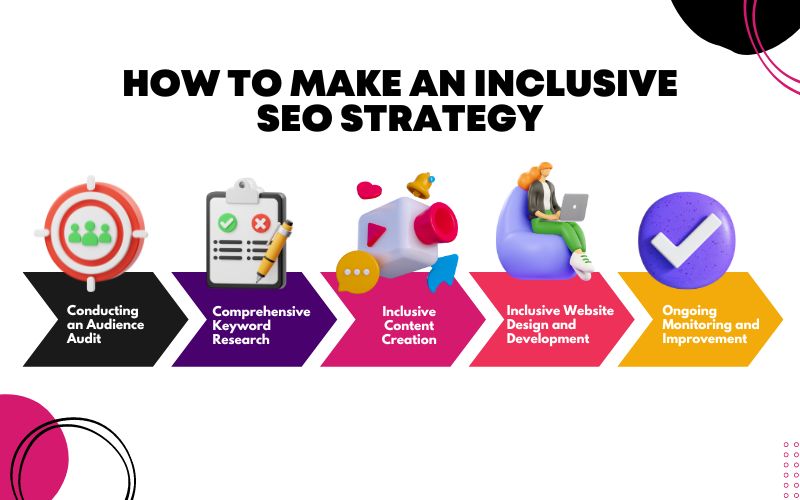
Inclusive SEO is easier to achieve than you've thought. Just follow these steps and your business is on its way to becoming an inclusive one.
Conducting an Audience Audit
Conducting an audience audit is often the first step in making an inclusive SEO strategy. But let's change it up for a bit.
A better approach to doing an audience audit for inclusive SEO is to go beyond website analytics. While website analytics provide valuable data on current visitors, these numbers might not reveal the entire audience picture.
Look at surveys, social media engagement, and market research to understand the diversity within your target audience. It allows you to see some unique audience behaviour and features, and take note of them as you strategise your SEO.
Comprehensive Keyword Research
An integral part of any SEO strategy is keyword research. This time, you must look for long-tail variations of your usual keywords.
Expand your keyword research beyond primary keywords. Include low-competition keywords with long-tail variations that reflect how people from diverse backgrounds might search for your product or service. Tools like Google Keyword Planner can help with this.
Consider cultural nuances too when doing keyword research. Certain keywords might have unintended connotations in specific cultures. Research cultural variations in search terms to ensure your keywords are reaching the intended audience. It also makes you a responsible business.
Inclusive Content Creation
As you proceed to content creation, an inclusive strategy for SEO should remain the top priority.
First, aim to write for readability. Use clear, concise language and avoid overly technical jargon. Aim for a Flesch-Kincaid reading ease score above 70 to ensure easy comprehension for a wider audience. There are free online tools to check this score.
Incorporate multimedia as well when creating website content. Break up chunks of text with relevant videos, infographics, and audio recordings. This caters to different learning styles and can improve accessibility for users with visual impairments.
And as always, prioritise mobile-friendliness. A significant portion of web searches happen on mobile devices. Ensure your website has a responsive web design that functions well on all screen sizes. It also improves your business searchability online.
Inclusive Website Design and Development
Website design and development should also conform with your inclusive SEO plan to ensure unified results.
For web development, a valid and clean code is essential for search engines to properly crawl and index your website. This also improves accessibility for screen readers and assistive technologies.
Next, optimise alt texts for your website images. Include descriptive alt text for all images on your website. This helps visually impaired users understand the content of the image and is also considered by search engines.
Lastly, a clear keyboard navigation is essential. Make sure your website can be fully navigated using just a keyboard. This is crucial for users who rely on assistive technologies or have difficulty using a mouse.
Ongoing Monitoring and Improvement
But it doesn't end there as soon as you do them all. An SEO strategy, like other marketing strategies, is also an ongoing process you should check from time to time.
Use website analytics tools to track user engagement metrics across different demographics. This can help identify areas where your website might be less inclusive for certain audience segments.
Accessibility testing tools can also help. There are online tools and browser extensions that can help you identify and fix accessibility issues on your website.
Plan Your SEO Strategy With Us!
In today's digital landscape, exclusion is simply bad for business. An Inclusive SEO makes a big difference for your business, as you welcome all sorts of people into your gates, making them feel welcomed and accepted.
Remember, everyone deserves to be seen, heard, and understood online. Let's work together to craft an SEO strategy that celebrates diversity and propels your business forward. Contact our team of SEO experts today for a free consultation and see how we can strategise your SEO!
A potential customer brimming with excitement discovers your business online with your SEO strategy. But without it, they're met with a wall – content that doesn't resonate, imagery that feels exclusionary, or a clunky design on their mobile device.
Familiar with this? That's the scenario your business can run into if you don't use inclusive SEO in your strategy. But what is it? And how can it help your business and your clients?
SEO should not only be effective, but inclusive. Now, are you ready to unlock the full potential of your online presence and reach a wider audience? Discover how crafting an inclusive SEO can transform your business!
What’s Inside?
- What is An Inclusive SEO Strategy?
- What is DEI in Inclusive SEO Strategy?
- How To Make an Inclusive SEO Strategy
- Plan Your SEO Strategy With Us!
What is An Inclusive SEO Strategy?
An inclusive SEO strategy ensures you optimise your website and content to be discoverable and usable for a diverse range of users. It goes beyond traditional SEO strategy by considering the needs of people from various backgrounds and abilities.
We've known that regular SEO focuses on ranking high in search results. But when you make it inclusive, you create content that resonates with a broad audience and reaches a wider range of potential customers.
Why Is SEO Strategy Important?
A comprehensive SEO plan does so much for your business, but what are those? We listed down the benefits of making your SEO strategy inclusive for everyone.
Reaches a Wider Audience
By using inclusive language and catering to diverse needs in your SEO plan, you open your website up to a much larger pool of potential customers who might have otherwise been excluded.
Improves Brand Reputation
Demonstrating a commitment to inclusion through your SEO strategy portrays your brand positively. It shows that you value diversity and welcome everyone.
Boosts User Engagement
Content written with inclusivity in mind is more likely to resonate with a wider audience. People are more likely to stay engaged and explore your website if they feel seen and acknowledged.
Enhances Accessibility
SEO and accessibility go hand-in-hand. Many SEO best practices, like clear website structure and proper coding, also improve accessibility for users with disabilities. This ensures everyone can access your information.
Potential for Higher Rankings
While not a direct ranking factor, some believe that websites that prioritise user experience, which includes accessibility, may be looked upon more favorably by search engines.
Avoids Unintentional Bias
Inclusive SEO encourages you to critically examine your target audience and any wrong assumptions you might have made. This can help you avoid alienating potential customers.
In conclusion, inclusive SEO strategy isn't just about being politically correct, it's about smart business strategy. By creating a welcoming and accessible online space, you can reach a wider audience, improve brand perception, and ultimately achieve greater success.
What is DEI in Inclusive SEO Strategy?
Whenever we discuss inclusive SEO, the concept of DEI appears. But what is it? And how important is this in making our inclusive SEO strategy successful?
DEI stands for diversity, equity, and inclusion. In the context of inclusive SEO, it refers to creating a search engine optimisation strategy considerate to the needs of a diverse audience. Here's how each aspect of DEI applies to SEO.
Diversity
A diverse SEO strategy recognises your target audience's various identities and experiences. This includes race, ethnicity, gender identity, sexual orientation, ability, religion, age, and more.
Equity
You're building an equitable business when you provide everyone with an equal opportunity to find your website through search engines. This involves removing any barriers preventing certain groups from accessing your content.
Inclusion
Inclusivity in SEO involves crafting content and designing your website that makes everyone feel welcomed and accepted. This includes using inclusive language, accessible design elements, and imagery that reflects the diversity of your audience.
By applying these DEI principles to your SEO strategy, you can ensure that your website is discoverable by a wider range of potential customers, regardless of their background. This can lead to increased brand awareness, better brand reputation, and ultimately, a more successful online presence.
How To Make an Inclusive SEO Strategy?
Inclusive SEO is easier to achieve than you've thought. Just follow these steps and your business is on its way to becoming an inclusive one.
Conducting an Audience Audit
Conducting an audience audit is often the first step in making an inclusive SEO strategy. But let's change it up for a bit.
A better approach to doing an audience audit for inclusive SEO is to go beyond website analytics. While website analytics provide valuable data on current visitors, these numbers might not reveal the entire audience picture.
Look at surveys, social media engagement, and market research to understand the diversity within your target audience. It allows you to see some unique audience behaviour and features, and take note of them as you strategise your SEO.
Comprehensive Keyword Research
An integral part of any SEO strategy is keyword research. This time, you must look for long-tail variations of your usual keywords.
Expand your keyword research beyond primary keywords. Include low-competition keywords with long-tail variations that reflect how people from diverse backgrounds might search for your product or service. Tools like Google Keyword Planner can help with this.
Consider cultural nuances too when doing keyword research. Certain keywords might have unintended connotations in specific cultures. Research cultural variations in search terms to ensure your keywords are reaching the intended audience. It also makes you a responsible business.
Inclusive Content Creation
As you proceed to content creation, an inclusive strategy for SEO should remain the top priority.
First, aim to write for readability. Use clear, concise language and avoid overly technical jargon. Aim for a Flesch-Kincaid reading ease score above 70 to ensure easy comprehension for a wider audience. There are free online tools to check this score.
Incorporate multimedia as well when creating website content. Break up chunks of text with relevant videos, infographics, and audio recordings. This caters to different learning styles and can improve accessibility for users with visual impairments.
And as always, prioritise mobile-friendliness. A significant portion of web searches happen on mobile devices. Ensure your website has a responsive web design that functions well on all screen sizes. It also improves your business searchability online.
Inclusive Website Design and Development
Website design and development should also conform with your inclusive SEO plan to ensure unified results.
For web development, a valid and clean code is essential for search engines to properly crawl and index your website. This also improves accessibility for screen readers and assistive technologies.
Next, optimise alt texts for your website images. Include descriptive alt text for all images on your website. This helps visually impaired users understand the content of the image and is also considered by search engines.
Lastly, a clear keyboard navigation is essential. Make sure your website can be fully navigated using just a keyboard. This is crucial for users who rely on assistive technologies or have difficulty using a mouse.
Ongoing Monitoring and Improvement
But it doesn't end there as soon as you do them all. An SEO strategy, like other marketing strategies, is also an ongoing process you should check from time to time.
Use website analytics tools to track user engagement metrics across different demographics. This can help identify areas where your website might be less inclusive for certain audience segments.
Accessibility testing tools can also help. There are online tools and browser extensions that can help you identify and fix accessibility issues on your website.
Plan Your SEO Strategy With Us!
In today's digital landscape, exclusion is simply bad for business. An Inclusive SEO makes a big difference for your business, as you welcome all sorts of people into your gates, making them feel welcomed and accepted.
Remember, everyone deserves to be seen, heard, and understood online. Let's work together to craft an SEO strategy that celebrates diversity and propels your business forward. Contact our team of SEO experts today for a free consultation and see how we can strategise your SEO!
A potential customer brimming with excitement discovers your business online with your SEO strategy. But without it, they're met with a wall – content that doesn't resonate, imagery that feels exclusionary, or a clunky design on their mobile device.
Familiar with this? That's the scenario your business can run into if you don't use inclusive SEO in your strategy. But what is it? And how can it help your business and your clients?
SEO should not only be effective, but inclusive. Now, are you ready to unlock the full potential of your online presence and reach a wider audience? Discover how crafting an inclusive SEO can transform your business!
What’s Inside?
- What is An Inclusive SEO Strategy?
- What is DEI in Inclusive SEO Strategy?
- How To Make an Inclusive SEO Strategy
- Plan Your SEO Strategy With Us!
What is An Inclusive SEO Strategy?
An inclusive SEO strategy ensures you optimise your website and content to be discoverable and usable for a diverse range of users. It goes beyond traditional SEO strategy by considering the needs of people from various backgrounds and abilities.
We've known that regular SEO focuses on ranking high in search results. But when you make it inclusive, you create content that resonates with a broad audience and reaches a wider range of potential customers.
Why Is SEO Strategy Important?
A comprehensive SEO plan does so much for your business, but what are those? We listed down the benefits of making your SEO strategy inclusive for everyone.
Reaches a Wider Audience
By using inclusive language and catering to diverse needs in your SEO plan, you open your website up to a much larger pool of potential customers who might have otherwise been excluded.
Improves Brand Reputation
Demonstrating a commitment to inclusion through your SEO strategy portrays your brand positively. It shows that you value diversity and welcome everyone.
Boosts User Engagement
Content written with inclusivity in mind is more likely to resonate with a wider audience. People are more likely to stay engaged and explore your website if they feel seen and acknowledged.
Enhances Accessibility
SEO and accessibility go hand-in-hand. Many SEO best practices, like clear website structure and proper coding, also improve accessibility for users with disabilities. This ensures everyone can access your information.
Potential for Higher Rankings
While not a direct ranking factor, some believe that websites that prioritise user experience, which includes accessibility, may be looked upon more favorably by search engines.
Avoids Unintentional Bias
Inclusive SEO encourages you to critically examine your target audience and any wrong assumptions you might have made. This can help you avoid alienating potential customers.
In conclusion, inclusive SEO strategy isn't just about being politically correct, it's about smart business strategy. By creating a welcoming and accessible online space, you can reach a wider audience, improve brand perception, and ultimately achieve greater success.
What is DEI in Inclusive SEO Strategy?
Whenever we discuss inclusive SEO, the concept of DEI appears. But what is it? And how important is this in making our inclusive SEO strategy successful?
DEI stands for diversity, equity, and inclusion. In the context of inclusive SEO, it refers to creating a search engine optimisation strategy considerate to the needs of a diverse audience. Here's how each aspect of DEI applies to SEO.
Diversity
A diverse SEO strategy recognises your target audience's various identities and experiences. This includes race, ethnicity, gender identity, sexual orientation, ability, religion, age, and more.
Equity
You're building an equitable business when you provide everyone with an equal opportunity to find your website through search engines. This involves removing any barriers preventing certain groups from accessing your content.
Inclusion
Inclusivity in SEO involves crafting content and designing your website that makes everyone feel welcomed and accepted. This includes using inclusive language, accessible design elements, and imagery that reflects the diversity of your audience.
By applying these DEI principles to your SEO strategy, you can ensure that your website is discoverable by a wider range of potential customers, regardless of their background. This can lead to increased brand awareness, better brand reputation, and ultimately, a more successful online presence.
How To Make an Inclusive SEO Strategy?
Inclusive SEO is easier to achieve than you've thought. Just follow these steps and your business is on its way to becoming an inclusive one.
Conducting an Audience Audit
Conducting an audience audit is often the first step in making an inclusive SEO strategy. But let's change it up for a bit.
A better approach to doing an audience audit for inclusive SEO is to go beyond website analytics. While website analytics provide valuable data on current visitors, these numbers might not reveal the entire audience picture.
Look at surveys, social media engagement, and market research to understand the diversity within your target audience. It allows you to see some unique audience behaviour and features, and take note of them as you strategise your SEO.
Comprehensive Keyword Research
An integral part of any SEO strategy is keyword research. This time, you must look for long-tail variations of your usual keywords.
Expand your keyword research beyond primary keywords. Include low-competition keywords with long-tail variations that reflect how people from diverse backgrounds might search for your product or service. Tools like Google Keyword Planner can help with this.
Consider cultural nuances too when doing keyword research. Certain keywords might have unintended connotations in specific cultures. Research cultural variations in search terms to ensure your keywords are reaching the intended audience. It also makes you a responsible business.
Inclusive Content Creation
As you proceed to content creation, an inclusive strategy for SEO should remain the top priority.
First, aim to write for readability. Use clear, concise language and avoid overly technical jargon. Aim for a Flesch-Kincaid reading ease score above 70 to ensure easy comprehension for a wider audience. There are free online tools to check this score.
Incorporate multimedia as well when creating website content. Break up chunks of text with relevant videos, infographics, and audio recordings. This caters to different learning styles and can improve accessibility for users with visual impairments.
And as always, prioritise mobile-friendliness. A significant portion of web searches happen on mobile devices. Ensure your website has a responsive web design that functions well on all screen sizes. It also improves your business searchability online.
Inclusive Website Design and Development
Website design and development should also conform with your inclusive SEO plan to ensure unified results.
For web development, a valid and clean code is essential for search engines to properly crawl and index your website. This also improves accessibility for screen readers and assistive technologies.
Next, optimise alt texts for your website images. Include descriptive alt text for all images on your website. This helps visually impaired users understand the content of the image and is also considered by search engines.
Lastly, a clear keyboard navigation is essential. Make sure your website can be fully navigated using just a keyboard. This is crucial for users who rely on assistive technologies or have difficulty using a mouse.
Ongoing Monitoring and Improvement
But it doesn't end there as soon as you do them all. An SEO strategy, like other marketing strategies, is also an ongoing process you should check from time to time.
Use website analytics tools to track user engagement metrics across different demographics. This can help identify areas where your website might be less inclusive for certain audience segments.
Accessibility testing tools can also help. There are online tools and browser extensions that can help you identify and fix accessibility issues on your website.
Plan Your SEO Strategy With Us!
In today's digital landscape, exclusion is simply bad for business. An Inclusive SEO makes a big difference for your business, as you welcome all sorts of people into your gates, making them feel welcomed and accepted.
Remember, everyone deserves to be seen, heard, and understood online. Let's work together to craft an SEO strategy that celebrates diversity and propels your business forward. Contact our team of SEO experts today for a free consultation and see how we can strategise your SEO!
A potential customer brimming with excitement discovers your business online with your SEO strategy. But without it, they're met with a wall – content that doesn't resonate, imagery that feels exclusionary, or a clunky design on their mobile device.
Familiar with this? That's the scenario your business can run into if you don't use inclusive SEO in your strategy. But what is it? And how can it help your business and your clients?
SEO should not only be effective, but inclusive. Now, are you ready to unlock the full potential of your online presence and reach a wider audience? Discover how crafting an inclusive SEO can transform your business!
What’s Inside?
- What is An Inclusive SEO Strategy?
- What is DEI in Inclusive SEO Strategy?
- How To Make an Inclusive SEO Strategy
- Plan Your SEO Strategy With Us!
What is An Inclusive SEO Strategy?
An inclusive SEO strategy ensures you optimise your website and content to be discoverable and usable for a diverse range of users. It goes beyond traditional SEO strategy by considering the needs of people from various backgrounds and abilities.
We've known that regular SEO focuses on ranking high in search results. But when you make it inclusive, you create content that resonates with a broad audience and reaches a wider range of potential customers.
Why Is SEO Strategy Important?
A comprehensive SEO plan does so much for your business, but what are those? We listed down the benefits of making your SEO strategy inclusive for everyone.
Reaches a Wider Audience
By using inclusive language and catering to diverse needs in your SEO plan, you open your website up to a much larger pool of potential customers who might have otherwise been excluded.
Improves Brand Reputation
Demonstrating a commitment to inclusion through your SEO strategy portrays your brand positively. It shows that you value diversity and welcome everyone.
Boosts User Engagement
Content written with inclusivity in mind is more likely to resonate with a wider audience. People are more likely to stay engaged and explore your website if they feel seen and acknowledged.
Enhances Accessibility
SEO and accessibility go hand-in-hand. Many SEO best practices, like clear website structure and proper coding, also improve accessibility for users with disabilities. This ensures everyone can access your information.
Potential for Higher Rankings
While not a direct ranking factor, some believe that websites that prioritise user experience, which includes accessibility, may be looked upon more favorably by search engines.
Avoids Unintentional Bias
Inclusive SEO encourages you to critically examine your target audience and any wrong assumptions you might have made. This can help you avoid alienating potential customers.
In conclusion, inclusive SEO strategy isn't just about being politically correct, it's about smart business strategy. By creating a welcoming and accessible online space, you can reach a wider audience, improve brand perception, and ultimately achieve greater success.
What is DEI in Inclusive SEO Strategy?
Whenever we discuss inclusive SEO, the concept of DEI appears. But what is it? And how important is this in making our inclusive SEO strategy successful?
DEI stands for diversity, equity, and inclusion. In the context of inclusive SEO, it refers to creating a search engine optimisation strategy considerate to the needs of a diverse audience. Here's how each aspect of DEI applies to SEO.
Diversity
A diverse SEO strategy recognises your target audience's various identities and experiences. This includes race, ethnicity, gender identity, sexual orientation, ability, religion, age, and more.
Equity
You're building an equitable business when you provide everyone with an equal opportunity to find your website through search engines. This involves removing any barriers preventing certain groups from accessing your content.
Inclusion
Inclusivity in SEO involves crafting content and designing your website that makes everyone feel welcomed and accepted. This includes using inclusive language, accessible design elements, and imagery that reflects the diversity of your audience.
By applying these DEI principles to your SEO strategy, you can ensure that your website is discoverable by a wider range of potential customers, regardless of their background. This can lead to increased brand awareness, better brand reputation, and ultimately, a more successful online presence.
How To Make an Inclusive SEO Strategy?
Inclusive SEO is easier to achieve than you've thought. Just follow these steps and your business is on its way to becoming an inclusive one.
Conducting an Audience Audit
Conducting an audience audit is often the first step in making an inclusive SEO strategy. But let's change it up for a bit.
A better approach to doing an audience audit for inclusive SEO is to go beyond website analytics. While website analytics provide valuable data on current visitors, these numbers might not reveal the entire audience picture.
Look at surveys, social media engagement, and market research to understand the diversity within your target audience. It allows you to see some unique audience behaviour and features, and take note of them as you strategise your SEO.
Comprehensive Keyword Research
An integral part of any SEO strategy is keyword research. This time, you must look for long-tail variations of your usual keywords.
Expand your keyword research beyond primary keywords. Include low-competition keywords with long-tail variations that reflect how people from diverse backgrounds might search for your product or service. Tools like Google Keyword Planner can help with this.
Consider cultural nuances too when doing keyword research. Certain keywords might have unintended connotations in specific cultures. Research cultural variations in search terms to ensure your keywords are reaching the intended audience. It also makes you a responsible business.
Inclusive Content Creation
As you proceed to content creation, an inclusive strategy for SEO should remain the top priority.
First, aim to write for readability. Use clear, concise language and avoid overly technical jargon. Aim for a Flesch-Kincaid reading ease score above 70 to ensure easy comprehension for a wider audience. There are free online tools to check this score.
Incorporate multimedia as well when creating website content. Break up chunks of text with relevant videos, infographics, and audio recordings. This caters to different learning styles and can improve accessibility for users with visual impairments.
And as always, prioritise mobile-friendliness. A significant portion of web searches happen on mobile devices. Ensure your website has a responsive web design that functions well on all screen sizes. It also improves your business searchability online.
Inclusive Website Design and Development
Website design and development should also conform with your inclusive SEO plan to ensure unified results.
For web development, a valid and clean code is essential for search engines to properly crawl and index your website. This also improves accessibility for screen readers and assistive technologies.
Next, optimise alt texts for your website images. Include descriptive alt text for all images on your website. This helps visually impaired users understand the content of the image and is also considered by search engines.
Lastly, a clear keyboard navigation is essential. Make sure your website can be fully navigated using just a keyboard. This is crucial for users who rely on assistive technologies or have difficulty using a mouse.
Ongoing Monitoring and Improvement
But it doesn't end there as soon as you do them all. An SEO strategy, like other marketing strategies, is also an ongoing process you should check from time to time.
Use website analytics tools to track user engagement metrics across different demographics. This can help identify areas where your website might be less inclusive for certain audience segments.
Accessibility testing tools can also help. There are online tools and browser extensions that can help you identify and fix accessibility issues on your website.
Plan Your SEO Strategy With Us!
In today's digital landscape, exclusion is simply bad for business. An Inclusive SEO makes a big difference for your business, as you welcome all sorts of people into your gates, making them feel welcomed and accepted.
Remember, everyone deserves to be seen, heard, and understood online. Let's work together to craft an SEO strategy that celebrates diversity and propels your business forward. Contact our team of SEO experts today for a free consultation and see how we can strategise your SEO!







4.4 rating from 30 Google reviews